

Introduction
In the global seafood industry, crab fishing remains one of the most profitable and highly demanded segments, supplying restaurants, supermarkets, and seafood processors worldwide. As commercial fishing operations expand, efficiency, durability, and catch consistency have become critical factors in equipment selection. Among all fishing tools used in crab harvesting, the heavy duty crab trap plays a central role in ensuring high-volume and reliable production.
A heavy duty crab trap is specifically designed for long-term commercial use in harsh marine environments. Unlike lightweight recreational traps, it is built with reinforced frames, corrosion-resistant materials, and optimized entry systems that maximize catch rates while minimizing escape possibilities. These traps are widely used in offshore and coastal fisheries targeting species such as blue crab, Dungeness crab, snow crab, and king crab.
This article provides a complete overview of heavy duty crab trap systems, including their structure, materials, benefits, applications, selection factors, and industry trends. It is designed to help commercial fishermen, seafood companies, and fishing gear suppliers understand how to improve productivity and profitability.
What Is a Heavy Duty Crab Trap?
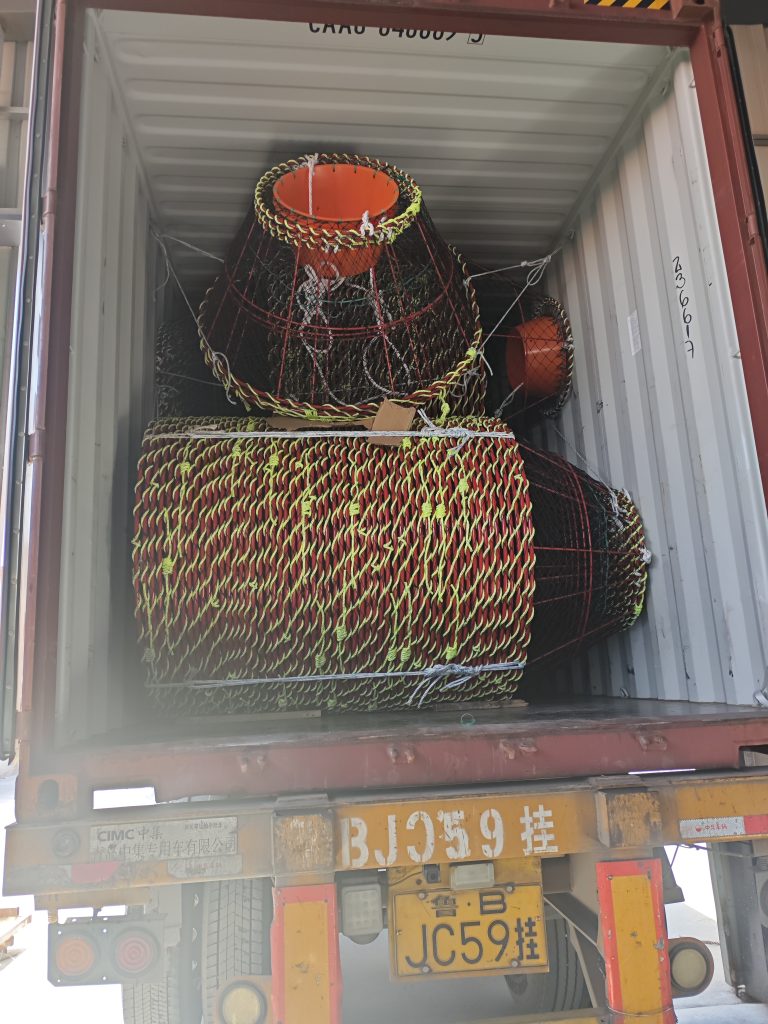
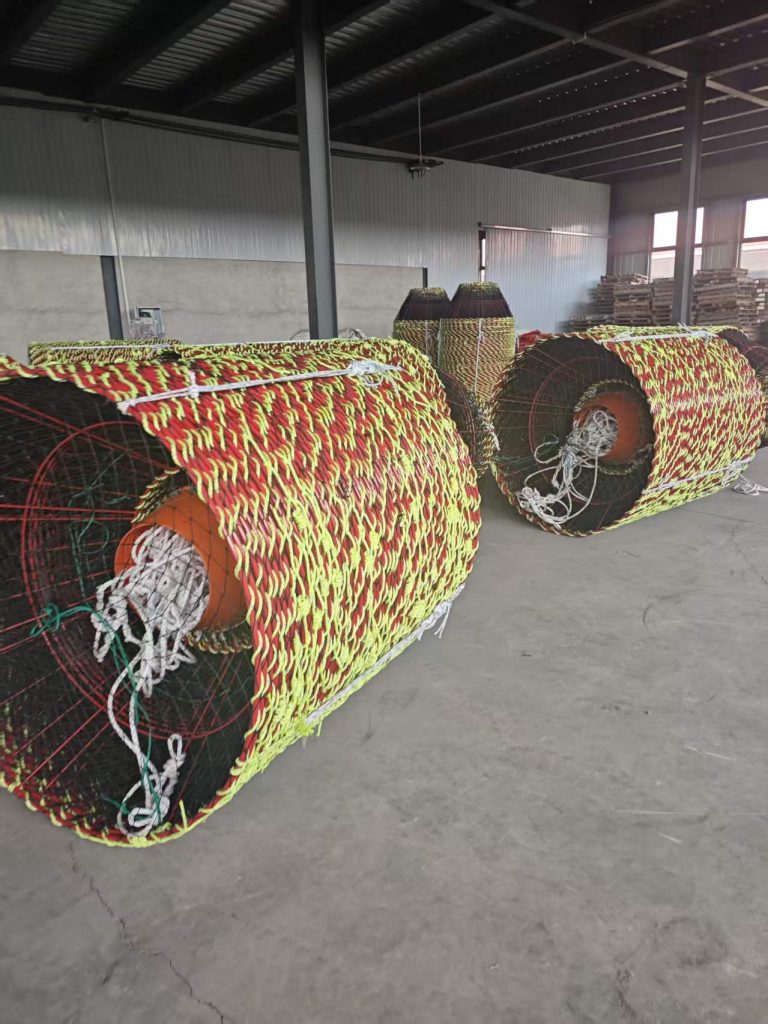
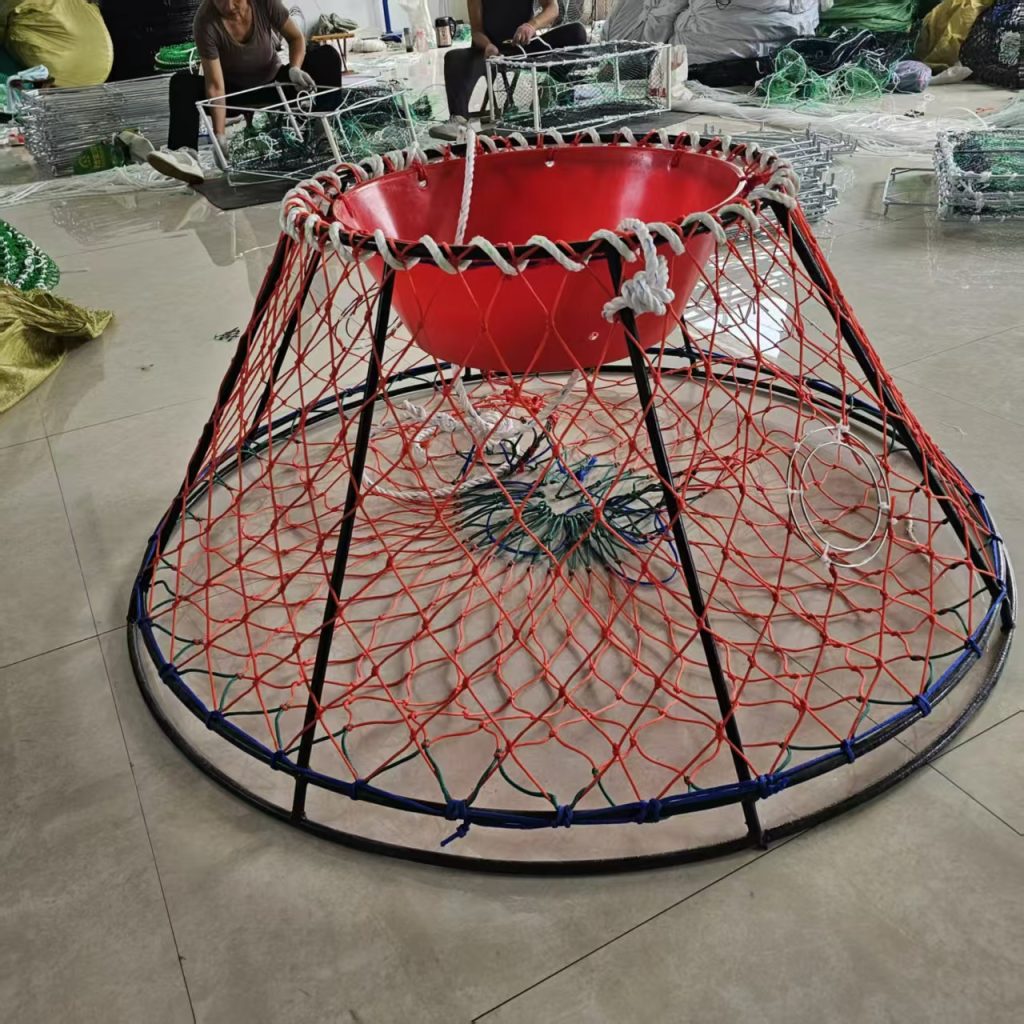
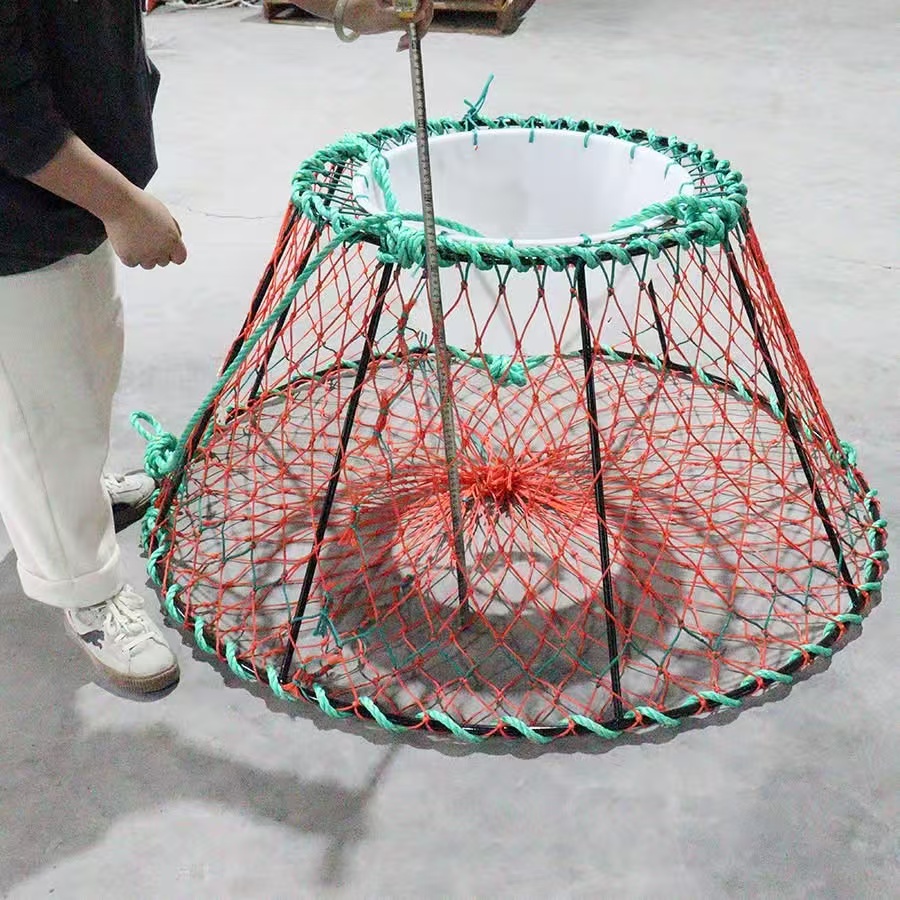
A heavy duty crab trap is a reinforced fishing cage designed for repeated deployment in commercial crab harvesting operations. It typically consists of a metal frame combined with mesh panels and multiple entry funnels that allow crabs to enter but prevent escape.
These traps are engineered for durability and efficiency in demanding marine environments where strong currents, saltwater corrosion, and biological fouling are common challenges.
Key Features:
- Reinforced steel or aluminum frame
- High-strength mesh or netting panels
- Funnel-shaped entry systems
- Bait compartments
- Escape-prevention design
- Corrosion-resistant coating
Because of these features, a heavy duty crab trap can withstand continuous use in offshore fisheries.
Why Heavy Duty Crab Traps Are Essential for Commercial Fishing
Commercial crab fishing requires equipment that can operate efficiently under high-pressure conditions. The heavy duty crab trap offers several advantages that make it essential in modern fisheries.
High Catch Efficiency
These traps are designed to attract and retain large quantities of crabs using optimized bait placement and entry funnels.
Durability in Harsh Environments
Saltwater, waves, and long deployment cycles demand strong materials. Heavy-duty construction ensures long service life.
Reduced Operational Costs
Fewer replacements and repairs lead to lower long-term expenses.
Scalable Fishing Operations
Multiple traps can be deployed simultaneously, increasing harvest volume without significantly increasing labor.
Improved Safety for Fishermen
Mechanical retrieval reduces exposure to dangerous sea conditions.
Structure and Design of Heavy Duty Crab Trap
The performance of a heavy duty crab trap depends on its structural design and engineering precision.
Main Components:
- Frame structure (steel/aluminum)
- Mesh walls or panels
- Entry funnels
- Bait box
- Lifting rope system
- Escape panels (optional)
Table 1: Structural Components and Functions
| Component | Function | Importance |
|---|---|---|
| Frame | Provides structural strength | Critical |
| Mesh Panels | Contain crabs | Élevé |
| Entry Funnels | Allow crab entry | Critical |
| Bait Box | Attracts crabs | Élevé |
| Escape Panel | Juvenile release | Moyen |
| Rope System | Retrieval | Critical |
Each component plays a role in maximizing the efficiency of a heavy duty crab trap.
Materials Used in Heavy Duty Crab Trap Construction
Material selection determines the trap’s durability, weight, and performance.
Galvanized Steel
Widely used due to its strength and affordability.
- High durability
- Moderate corrosion resistance
- Heavy weight
PVC-Coated Steel
Offers improved protection against seawater corrosion.
- Excellente durabilité
- Smooth surface
- Longue durée de vie
Aluminum Alloy
Used in premium lightweight traps.
- Léger
- High corrosion resistance
- Higher cost
High-Strength Netting Panels
Often made from polyethylene or nylon.
- Structure flexible
- Impact resistance
- Easy replacement
Table 2: Material Comparison
| Matériau | Force | Corrosion Resistance | Poids | Coût |
|---|---|---|---|---|
| Galvanized Steel | Élevé | Moyen | Lourd | Faible |
| PVC-Coated Steel | Très élevé | Élevé | Moyen | Moyen |
| Aluminum Alloy | Moyen | Très élevé | Light | Élevé |
| PE Netting Panels | Moyen | Très élevé | Very Light | Faible |
How a Heavy Duty Crab Trap Works
The operating principle of a heavy duty crab trap is simple but highly effective.
Step-by-Step Process:
- Bait is placed inside the trap
- Trap is deployed on seabed
- Crabs are attracted by scent
- Crabs enter through funnel openings
- Escape is prevented by internal structure
- Trap is retrieved after soaking period
This cycle allows continuous harvesting with minimal labor input.
Applications in Commercial Crab Fishing
Heavy duty crab traps are widely used in global fisheries.
Common Target Species:
- Blue crab
- Dungeness crab
- Snow crab
- King crab
Fishing Environments:
- Eaux côtières
- Offshore deep sea
- Estuarine regions
- Cold-water fisheries
Table 3: Application Scenarios
| Environnement | Trap Requirement | Performance Level |
|---|---|---|
| Coastal | Medium durability | Élevé |
| Offshore | Heavy-duty design | Très élevé |
| Deep Sea | Reinforced structure | Critical |
| Estuary | Corrosion resistance | Élevé |
Advantages of Heavy Duty Crab Trap in Commercial Operations
High Productivity
Large capacity design allows multiple crabs per cycle.
Longue durée de vie
Durable materials extend operational lifespan.
Reduced Bycatch
Selective entry design reduces unwanted species capture.
Efficient Labor Usage
Minimal supervision required after deployment.
Environmental Compatibility
Modern designs support sustainable fishing practices.
Performance Comparison with Other Fishing Methods
Table 4: Fishing Method Efficiency Comparison
| Method | Catch Efficiency | Coût | Impact environnemental | Labor Requirement |
|---|---|---|---|---|
| Heavy Duty Crab Trap | Très élevé | Moyen | Faible | Faible |
| Trawling | Très élevé | Élevé | Élevé | Élevé |
| Hand Fishing | Faible | Faible | Very Low | Élevé |
| Net Fishing | Moyen | Moyen | Moyen | Moyen |
The heavy duty crab trap provides a balanced solution for efficiency and sustainability.
How to Choose the Right Heavy Duty Crab Trap
Selecting the right trap is crucial for commercial success.
Target Crab Species
Different species require different entry sizes and trap dimensions.
Water Depth
Deep waters require stronger and heavier structures.
Current Strength
Stronger currents require weighted and reinforced traps.
Trap Size
Large traps increase catch volume but require more handling equipment.
Qualité des matériaux
Corrosion-resistant materials are essential for long-term use.
Maintenance and Lifespan of Heavy Duty Crab Trap
Proper maintenance ensures long-term performance.
Conseils d'entretien :
- Rinse after saltwater exposure
- Inspect mesh and frame regularly
- Remove algae and marine growth
- Repair damaged parts immediately
- Store in dry conditions when not in use
Table 5: Expected Lifespan
| Environnement | Durée de vie |
|---|---|
| Freshwater | 3–5 years |
| Coastal | 2 à 4 ans |
| Offshore | 1,5 à 3 ans |
Economic Benefits for Commercial Fisheries
Investing in a heavy duty crab trap provides strong financial returns.
Key Benefits:
- Lower replacement frequency
- Reduced labor costs
- Higher catch consistency
- Improved fuel efficiency
- Better long-term ROI
Cost Analysis Table
| Facteur | Standard Trap | Heavy Duty Crab Trap |
|---|---|---|
| Initial Cost | Faible | Moyen |
| Maintenance Cost | Élevé | Faible |
| Durée de vie | Short | Long |
| Profit Efficiency | Moyen | Élevé |
Impact environnemental et développement durable
Modern fisheries prioritize sustainability, and heavy duty crab traps contribute positively.
Benefits:
- Reduced seabed damage
- Lower bycatch rates
- Juvenile escape mechanisms
- Controlled harvesting practices
Some advanced models include escape rings that allow undersized crabs to exit, supporting population sustainability.
Future Trends in Heavy Duty Crab Trap Technology
The fishing industry is evolving with new innovations.
Emerging Trends:
- Smart GPS tracking systems
- Anti-corrosion nano coatings
- Biodegradable components
- Automated retrieval systems
- AI-assisted fishing optimization
These innovations will make heavy duty crab trap systems more efficient and environmentally friendly.
Si vous avez besoin de matériel de pêche ou d'autres services, n'hésitez pas à nous contacter !
E-mail : renqiangqiang001@outlook.com
WhatsApp : +86 15206862373
Instagram : https://www.instagram.com/qiangqiangr?igsh=emY0djk2a256eTI1&utm_source=qr
Conclusion
The heavy duty crab trap is an essential tool in modern commercial crab fishing, offering superior durability, high catch efficiency, and long-term economic benefits. Its robust construction and optimized design allow fishermen to operate efficiently in challenging marine environments while maintaining sustainable fishing practices.
From coastal fisheries to deep-sea operations, heavy-duty traps provide a reliable solution for large-scale crab harvesting. As technology continues to advance, these traps will become even more efficient, intelligent, and environmentally responsible, further strengthening their role in the global seafood industry.
FAQ
What is a heavy duty crab trap used for?
It is used for commercial crab fishing to efficiently capture large quantities of crabs in marine environments.
How does a heavy duty crab trap work?
It uses bait to attract crabs into funnel-shaped openings where they cannot escape, allowing for easy retrieval.
How long should a crab trap stay underwater?
Typically between 12 and 48 hours depending on species and environmental conditions.
What materials are best for heavy duty crab traps?
PVC-coated steel, galvanized steel, aluminum, and high-strength netting are commonly used.
How long does a heavy duty crab trap last?
Depending on environment, it can last between 1.5 and 5 years with proper maintenance.