

Introduction
The rapid expansion of global aquaculture has transformed the seafood industry, making fish farming one of the fastest-growing food production sectors in the world. As marine fish farms continue to scale their operations, the quality of farming equipment has become a critical factor in ensuring productivity, sustainability, and profitability. Among the essential components of every marine aquaculture system, fish farm cage netting plays a vital role in protecting fish stocks, maintaining water circulation, and supporting healthy growth.
Modern fish farm cage netting is engineered to withstand harsh marine environments, including strong ocean currents, saltwater corrosion, ultraviolet (UV) radiation, and continuous biological fouling. High-quality netting not only minimizes fish escapes but also reduces maintenance costs and extends the operational lifespan of aquaculture cages.
Whether you are establishing a new offshore fish farm or upgrading an existing aquaculture facility, selecting the right fish farm cage netting is one of the most important investment decisions. This comprehensive guide explains the features, benefits, materials, applications, maintenance practices, and future trends of fish farm cage netting, helping aquaculture professionals make informed purchasing decisions.
What Is Fish Farm Cage Netting?
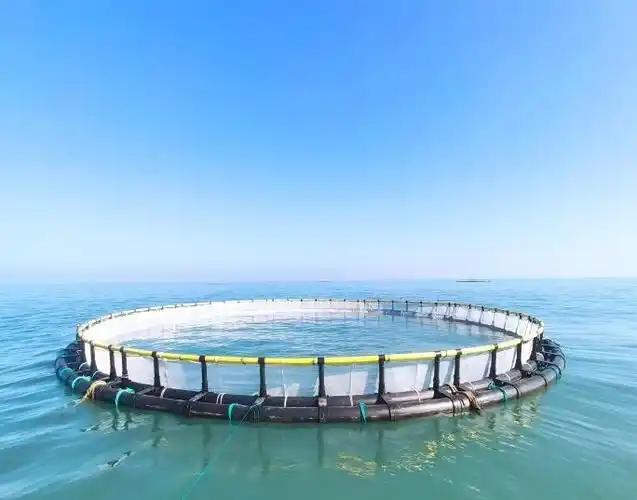
Fish farm cage netting is a specialized mesh material designed to enclose fish within floating or fixed aquaculture cage systems. It allows continuous water exchange while preventing fish from escaping and protecting them from predators.
Unlike conventional fishing nets, fish farm cage netting is intended for long-term deployment. It must maintain structural integrity despite continuous exposure to waves, tides, marine organisms, and weather conditions.
Typical characteristics include:
- Haute résistance à la traction
- Excellent knot stability
- Superior abrasion resistance
- UV-resistant construction
- Corrosion-resistant materials
- Longue durée de vie
- Flexible yet durable mesh structure
These characteristics make fish farm cage netting indispensable for modern marine aquaculture.
Why High-Quality Fish Farm Cage Netting Matters
The quality of fish farm cage netting directly influences farm productivity, operational safety, and overall profitability.
Improved Fish Retention
Strong netting prevents fish escapes, reducing financial losses while maintaining accurate stock management.
Better Water Circulation
Proper mesh design promotes natural water flow, ensuring adequate oxygen levels and removing waste efficiently.
Predator Protection
Marine predators such as seals, sea lions, sharks, birds, and large fish can threaten fish farms. Durable fish farm cage netting creates an effective protective barrier.
Reduced Maintenance Costs
High-quality materials require fewer repairs and replacements, lowering labor and maintenance expenses.
Enhanced Fish Welfare
Smooth, well-designed netting minimizes skin injuries and stress, contributing to healthier fish growth.
Common Materials Used for Fish Farm Cage Netting
Material selection significantly affects the performance and longevity of aquaculture cages.
High-Density Polyethylene (HDPE)
HDPE is widely used because it is lightweight and highly resistant to UV radiation and seawater.
Advantages include:
- Excellent corrosion resistance
- Low water absorption
- Rentable
- Easy handling
Nylon
Nylon provides excellent elasticity and tensile strength.
Advantages include:
- High flexibility
- Superior knot strength
- Excellente résistance à l'abrasion
Polyester
Polyester offers outstanding dimensional stability and UV resistance.
Advantages include:
- Low stretch
- Longue durée de vie
- Excellent weather resistance
Table 1: Comparison of Netting Materials
| Matériau | Résistance à la traction | Résistance aux UV | Flexibilité | Absorption d'eau | Application type |
|---|---|---|---|---|---|
| HDPE | Élevé | Excellent | Moyen | Very Low | Offshore cages |
| Nylon | Très élevé | Bien | Excellent | Moyen | Fish cages and hatcheries |
| Polyester | Élevé | Excellent | Moyen | Faible | Long-term installations |
Selecting the right material depends on farming conditions, fish species, and operational requirements.
Key Features of Durable Fish Farm Cage Netting
Modern fish farm cage netting incorporates several engineering improvements to maximize performance.
High Tensile Strength
Strong fibers resist stretching and deformation caused by fish movement and ocean currents.
Excellent Abrasion Resistance
Continuous contact with cage frames, mooring systems, and marine organisms creates friction. Durable netting withstands these conditions without rapid wear.
Stabilisation aux UV
Advanced UV stabilizers protect fish farm cage netting from sunlight degradation, extending its service life.
Anti-Fouling Compatibility
Many fish farms apply anti-fouling coatings to reduce algae, barnacles, and shell growth.
Stable Knot Construction
Strong knots maintain consistent mesh geometry throughout prolonged use.
Applications of Fish Farm Cage Netting
Fish farm cage netting is suitable for a wide variety of aquaculture operations.
Marine Fish Farming
Common species include:
- Salmon
- Sea bass
- Sea bream
- Grouper
- Yellowtail
- Cobia
Freshwater Aquaculture
Fish farm cage netting is also used in lakes and reservoirs for:
- Tilapia
- Catfish
- Carp
- Trout
Hatcheries
Fine mesh netting protects juvenile fish during early growth stages.
Offshore Aquaculture
Heavy-duty fish farm cage netting withstands deeper water environments with stronger currents.
Research Facilities
Marine research centers use specialized cage netting for breeding and biological studies.
Selecting the Right Fish Farm Cage Netting
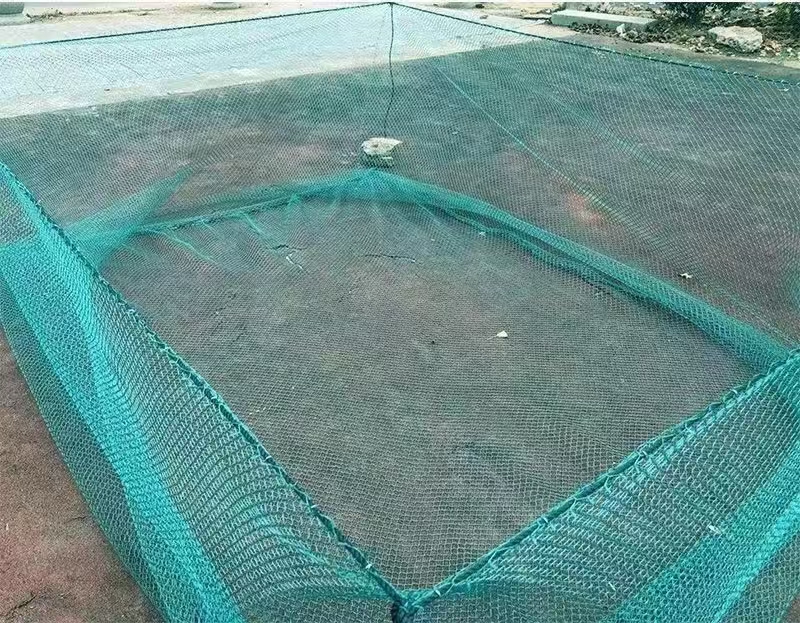
Choosing appropriate fish farm cage netting requires evaluating several important factors.
Maillage
Mesh size should correspond to fish size and farming stage.
Table 2: Recommended Mesh Sizes
| Fish Size | Recommended Mesh Size |
|---|---|
| Fry | 5–10 mm |
| Juveniles | 10 à 20 mm |
| Medium Fish | 20–40 mm |
| Adult Fish | 40–80 mm |
Proper mesh size improves water flow while preventing escapes.
Diamètre de la ficelle
Thicker twine increases durability but may slightly reduce water circulation.
Typical ranges include:
- Light-duty: 1–2 mm
- Medium-duty: 2–4 mm
- Heavy-duty: 4–6 mm
Type de nœud
Manufacturers generally offer:
- Knotted netting
- Filet sans nœuds
Knotted structures provide greater strength, while knotless designs reduce fish skin damage.
Traitement aux UV
Premium fish farm cage netting includes UV-resistant additives that significantly extend outdoor service life.
Breaking Strength
Always verify breaking strength according to stocking density and environmental conditions.
Environmental Challenges Facing Fish Farm Cage Netting
Marine environments create several challenges.
Strong Ocean Currents
Continuous water movement places constant stress on net structures.
Biofouling
Marine organisms such as algae, mussels, and barnacles reduce water circulation.
Predator Attacks
Seals, dolphins, birds, and sharks may damage weaker netting.
Storms and Extreme Weather
High waves and strong winds require reinforced cage systems.
High-quality fish farm cage netting is specifically designed to address these environmental pressures.
Maintenance Best Practices
Routine maintenance extends the lifespan of fish farm cage netting.
Recommended procedures include:
- Inspect nets weekly for tears.
- Remove algae and marine growth regularly.
- Repair damaged meshes immediately.
- Rotate cage positions when possible.
- Clean nets using approved methods.
- Replace severely worn sections promptly.
Table 3: Suggested Maintenance Schedule
| Maintenance Task | Fréquence |
|---|---|
| Visual inspection | Hebdomadaire |
| Net cleaning | Every 2–4 weeks |
| Structural inspection | Mensuel |
| Full maintenance | Every 6 months |
| Complete replacement assessment | Every 2–4 years |
Preventive maintenance significantly reduces operational costs.
Economic Benefits of Investing in Premium Fish Farm Cage Netting
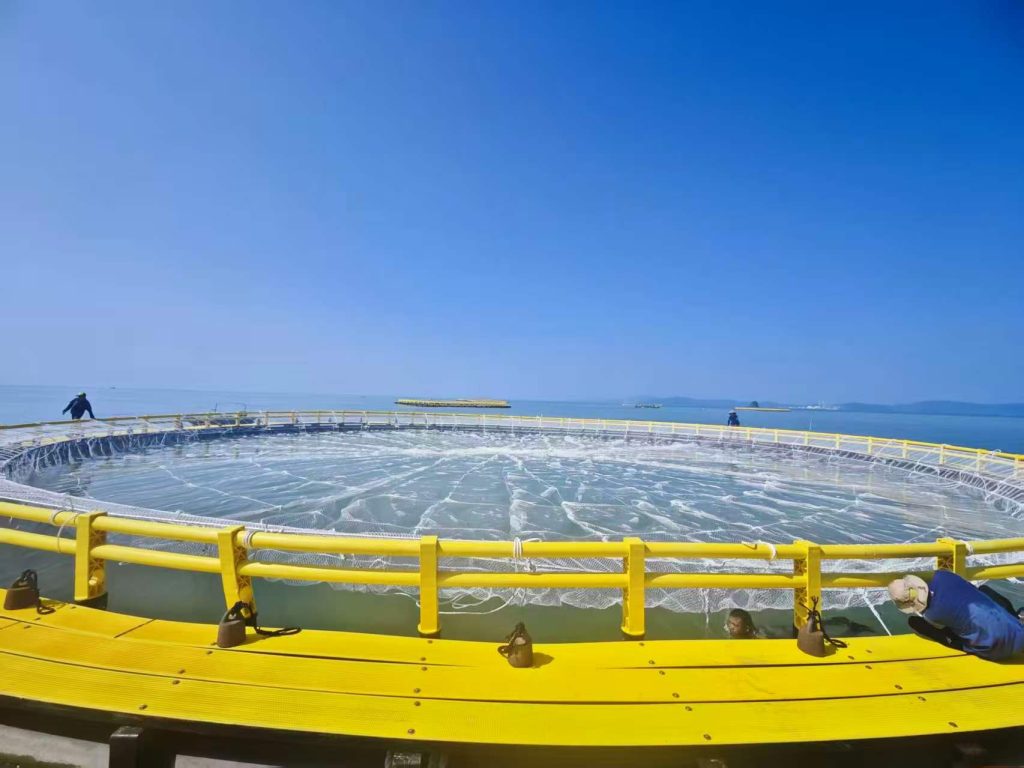
Although premium products require higher initial investment, they generate long-term savings.
Benefits include:
- Lower replacement frequency
- Reduced labor costs
- Fewer fish escapes
- Improved fish survival
- Higher production efficiency
- Better return on investment
Table 4: Cost Comparison
| Facteur | Standard Netting | Premium Fish Farm Cage Netting |
|---|---|---|
| Initial Cost | Inférieur | Plus élevé |
| Durée de vie | Shorter | Longer |
| Entretien | Frequent | Less Frequent |
| Fish Escape Risk | Plus élevé | Inférieur |
| Overall Operating Cost | Plus élevé | Inférieur |
Over several production cycles, premium fish farm cage netting often delivers significantly greater economic value.
Future Trends in Fish Farm Cage Netting
The aquaculture industry continues to adopt new technologies.
Emerging innovations include:
- Ultra-high-strength polyethylene fibers
- Copper alloy anti-fouling mesh
- Smart sensor-integrated netting
- Recyclable net materials
- AI-based net monitoring systems
- Eco-friendly coating technologies
These developments will improve durability, sustainability, and operational efficiency for marine fish farms worldwide.
How to Choose a Reliable Fish Farm Cage Netting Supplier
A dependable supplier should provide:
- Consistent product quality
- Certified raw materials
- Customized mesh sizes
- UV-resistant manufacturing
- Strict quality inspection
- OEM and ODM services
- Fast international shipping
- Technical support
Requesting product specifications, tensile strength reports, and sample testing before placing bulk orders helps ensure consistent quality.
Si vous avez besoin de matériel de pêche ou d'autres services, n'hésitez pas à nous contacter !
E-mail : renqiangqiang001@outlook.com
WhatsApp : +86 15206862373
Instagram : https://www.instagram.com/qiangqiangr?igsh=emY0djk2a256eTI1&utm_source=qr
Conclusion
As marine aquaculture continues to expand globally, investing in durable fish farm cage netting has become essential for maximizing production efficiency and protecting valuable fish stocks. High-quality netting improves fish welfare, reduces maintenance costs, enhances predator protection, and withstands demanding offshore environments.
Whether used in salmon farms, sea bass cages, grouper operations, or freshwater aquaculture systems, premium fish farm cage netting offers long-term value through superior strength, durability, and operational reliability.
By carefully selecting the appropriate material, mesh size, twine diameter, and supplier, aquaculture businesses can significantly improve productivity while reducing long-term operating costs. As technology advances, fish farm cage netting will continue to evolve with smarter materials, enhanced sustainability, and longer service life, making it an indispensable component of modern fish farming.
FAQ
What is fish farm cage netting used for?
Fish farm cage netting is used to contain farmed fish, prevent escapes, allow water circulation, and protect fish from predators in marine and freshwater aquaculture systems.
Which material is best for fish farm cage netting?
HDPE, nylon, and polyester are the most common materials. The best choice depends on farming conditions, target species, budget, and environmental requirements.
How long does fish farm cage netting last?
Premium fish farm cage netting typically lasts between 3 and 8 years, depending on material quality, UV exposure, maintenance practices, and farming conditions.
How can I reduce biofouling on fish farm cage netting?
Regular cleaning, scheduled maintenance, and anti-fouling coatings help minimize algae, barnacles, and other marine growth that can restrict water flow.
What mesh size should I choose?
Mesh size depends on the size of the fish being farmed. Smaller mesh is suitable for fry and juvenile fish, while larger mesh is recommended for adult fish to maximize water circulation.