

Introduction
Aquaculture has become an important part of the global seafood industry, providing fish, shrimp, crabs, shellfish, and other aquatic products for markets around the world. As aquaculture operations become larger and more specialized, reliable equipment is essential for improving production efficiency, protecting farmed species, and maintaining stable growing conditions. Among the many products used in modern aquaculture systems, aquaculture netting PE is one of the most important.
Aquaculture netting PE is widely used in fish cages, shrimp farms, breeding ponds, offshore aquaculture systems, fish pens, hatcheries, and other aquatic farming applications. Made primarily from polyethylene, aquaculture netting PE offers a combination of strength, flexibility, corrosion resistance, and durability that makes it suitable for demanding aquatic environments.
However, not every type of aquaculture netting PE is suitable for every farming operation. Different aquaculture projects require different mesh sizes, net diameters, construction methods, colors, and levels of resistance to abrasion and environmental exposure. Choosing the wrong aquaculture netting PE can lead to frequent replacement, poor water circulation, fish escape, predator damage, or increased maintenance costs.
For this reason, understanding how to choose the best aquaculture netting PE is essential for both small farms and large commercial aquaculture operations. This guide explains the most important factors to consider when selecting aquaculture netting PE, including material quality, mesh size, net strength, UV resistance, water flow, application requirements, maintenance, and cost.
What Is Aquaculture Netting PE?
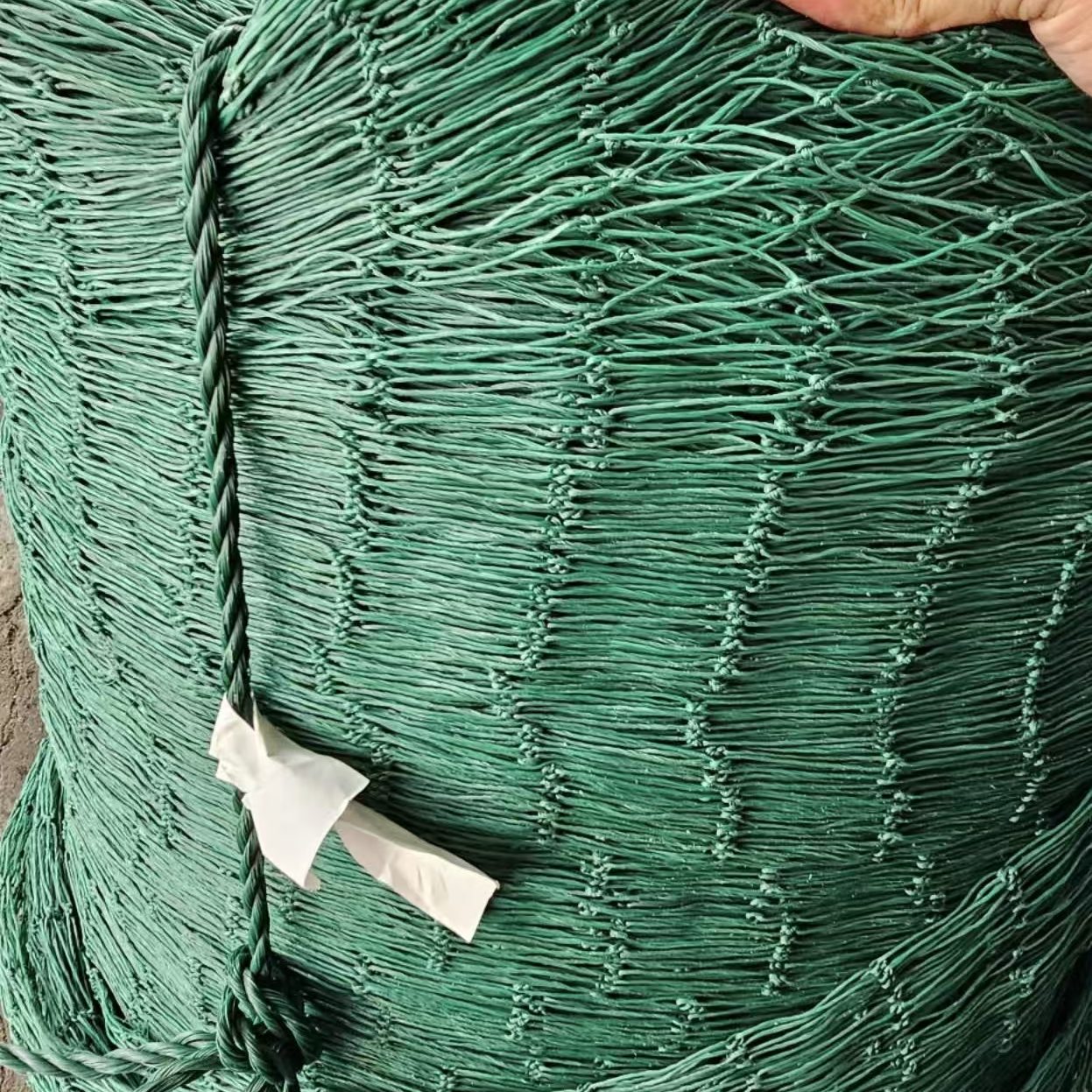
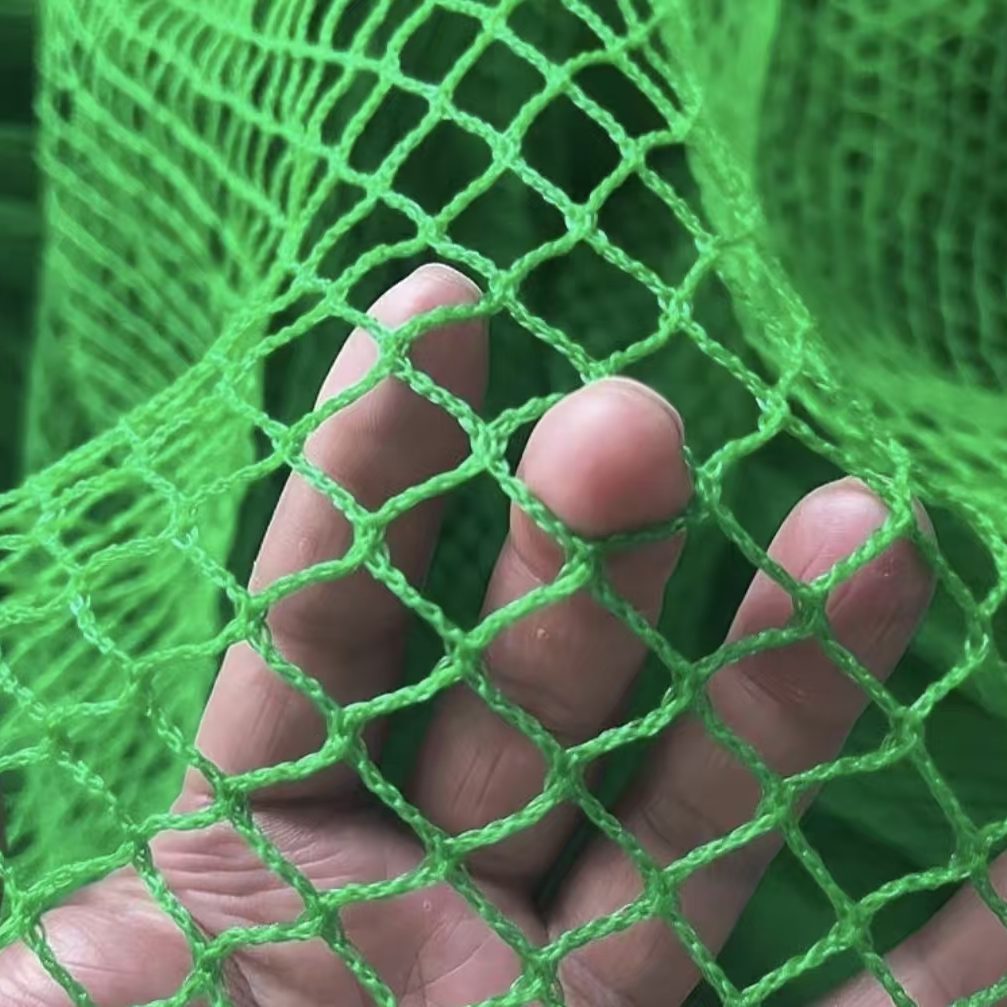
Aquaculture netting PE refers to netting manufactured from polyethylene materials for use in aquatic farming and fishery-related applications. PE is commonly selected because it performs well in wet environments and can withstand continuous exposure to water.
The basic function of aquaculture netting PE is to create a controlled physical barrier. Depending on the application, this barrier can keep farmed fish inside a cage, prevent predators from entering a farming area, separate different species, protect young fish, or support aquaculture structures.
Aquaculture netting PE can be produced in different mesh sizes and configurations. A small mesh is generally suitable for smaller fish or juvenile species, while larger mesh sizes may be appropriate for larger fish and applications where maximum water exchange is required.
The characteristics of aquaculture netting PE can vary considerably depending on the manufacturing process and raw material quality. High-quality aquaculture netting PE should provide sufficient tensile strength, good dimensional stability, resistance to sunlight, and resistance to normal abrasion during operation.
Common Applications of Aquaculture Netting PE
Aquaculture netting PE is used in many different farming environments. Some common applications include:
| Application | Main Function of Aquaculture Netting PE | Important Requirement |
|---|---|---|
| Fish cages | Contain farmed fish | High strength and durability |
| Shrimp farms | Separate and protect shrimp | Fine mesh and water circulation |
| Fish ponds | Create barriers and partitions | Flexibility and easy installation |
| Offshore cages | Protect fish in open water | Excellent strength and UV resistance |
| Hatcheries | Protect juvenile fish | Small and consistent mesh |
| Fish pens | Define farming areas | Abrasion resistance |
| Predator protection | Prevent predators from entering | Strong mesh construction |
| Species separation | Separate different species | Suitable mesh size |
Because each application has different requirements, choosing aquaculture netting PE should always begin with a clear understanding of the farming environment.
Why Choose Aquaculture Netting PE?
There are several reasons why aquaculture netting PE has become a popular option for fish farming and other aquatic applications.
High Resistance to Water Exposure
Aquaculture netting PE is designed to operate in wet environments. Unlike some materials that may deteriorate quickly when exposed to continuous moisture, polyethylene performs well in aquatic conditions.
This makes aquaculture netting PE suitable for freshwater, brackish-water, and many marine aquaculture applications. The exact performance will depend on the grade of PE, net construction, environmental conditions, and maintenance practices.
Good Mechanical Strength
A major advantage of aquaculture netting PE is its ability to provide reliable mechanical performance. A properly selected aquaculture netting PE can resist pulling, handling, and normal operational forces.
For offshore cages, mechanical strength becomes especially important because waves, currents, wind, fish movement, and equipment handling can place significant stress on the net.
Lightweight Construction
Compared with some heavier materials, PE netting can provide a relatively lightweight solution. This makes aquaculture netting PE easier to handle, install, remove, and maintain.
Lower handling weight can also help reduce the labor required during installation and periodic net replacement.
Resistance to Corrosion
Metal components can be vulnerable to corrosion in wet or marine environments. Aquaculture netting PE does not have the same corrosion mechanism as metal netting, which makes it useful for long-term aquatic applications.
This characteristic is particularly valuable in marine aquaculture, where saltwater exposure can accelerate corrosion of unsuitable materials.
Flexible and Easy to Install
Aquaculture netting PE is available in different configurations and can be manufactured to suit specific cage, pond, or enclosure dimensions. Its flexibility makes it easier to adapt to different structures.
For farms with irregular layouts or customized cage systems, flexible aquaculture netting PE can simplify installation and adjustment.
How to Choose the Right Aquaculture Netting PE
Selecting the best aquaculture netting PE requires more than simply comparing prices. Several technical and practical factors should be evaluated before making a purchase.
Consider the Aquaculture Species
The first factor to consider is the species being farmed.
Different species have different body sizes, swimming patterns, feeding behavior, and escape risks. For example, small juvenile fish require a smaller mesh size than mature fish. Species with strong swimming behavior may also require stronger aquaculture netting PE.
Before selecting aquaculture netting PE, determine:
- Species being farmed
- Average fish or animal size
- Maximum expected size
- Growth stage
- Swimming behavior
- Potential escape risk
- Predator risk
The mesh size should be selected according to the size of the animals rather than simply choosing the cheapest or most widely available option.
Select the Correct Mesh Size
Mesh size is one of the most important specifications of aquaculture netting PE.
If the mesh is too large, smaller fish may escape. If the mesh is too small, water flow can be restricted and the net may accumulate more algae, debris, and organic matter.
The right aquaculture netting PE should balance containment and water exchange.
| Fish or Aquatic Animal Size | Typical Consideration for Aquaculture Netting PE |
| Very small juveniles | Fine mesh |
| Small fish | Small to medium mesh |
| Medium-sized fish | Medium mesh |
| Large fish | Larger mesh |
| High-current applications | Mesh selected for both strength and water flow |
| Predator protection | Mesh based on predator size and entry risk |
The exact mesh size should always be determined based on the actual species, size, farming method, and local operating conditions.
Check Netting Strength
Strength is another critical factor when selecting aquaculture netting PE.
A net can appear strong during a simple visual inspection but still fail under continuous loading. Commercial aquaculture systems can expose netting to fish activity, currents, waves, equipment contact, and environmental stress.
When comparing aquaculture netting PE products, pay attention to:
- Net diameter
- Tensile strength
- Knot strength where applicable
- Breaking load
- Construction method
- Abrasion resistance
- Load-bearing capacity
For offshore farming, stronger aquaculture netting PE is usually necessary because the net is exposed to more severe environmental forces.
Evaluate UV Resistance
Sunlight is a major factor in outdoor aquaculture.
Ultraviolet radiation can gradually degrade polymer materials if the netting is not properly stabilized. Therefore, UV resistance should be an important consideration when selecting aquaculture netting PE for outdoor ponds, coastal farms, and offshore cages.
High-quality aquaculture netting PE can be manufactured with suitable UV stabilizers to improve its resistance to long-term sunlight exposure.
When evaluating UV resistance, ask the supplier about:
- UV stabilization
- Raw material quality
- Expected service environment
- Recommended service life
- Relevant testing information
A net that costs slightly more but lasts significantly longer may provide a lower total cost over the life of an aquaculture project.
Aquaculture Netting PE Material Quality
The quality of the raw material has a direct impact on the performance of aquaculture netting PE.
Not all polyethylene materials have identical characteristics. Different grades, formulations, additives, and manufacturing processes can result in significant differences in strength, flexibility, UV resistance, and durability.
When buying aquaculture netting PE, it is important to understand whether the supplier uses high-quality polyethylene and whether the material is designed for outdoor aquatic applications.
Virgin PE vs. Recycled Materials
Some manufacturers may offer aquaculture netting PE made from virgin PE, recycled materials, or blends.
Virgin PE can provide more predictable physical properties and may be preferred for demanding applications. Recycled materials can reduce costs, but their consistency and performance depend heavily on the recycling and manufacturing process.
For critical commercial aquaculture applications, buyers should ask suppliers about the material composition and quality control process.
| Material Consideration | Potential Advantage | What Buyers Should Check |
| Virgin PE | Consistent performance | Material specification |
| Recycled PE | Potentially lower cost | Quality and consistency |
| UV-stabilized PE | Better outdoor durability | UV stabilization details |
| High-strength PE | Suitable for demanding loads | Tensile performance |
| Customized PE formulation | Application-specific performance | Manufacturer testing |
Aquaculture Netting PE and Water Circulation
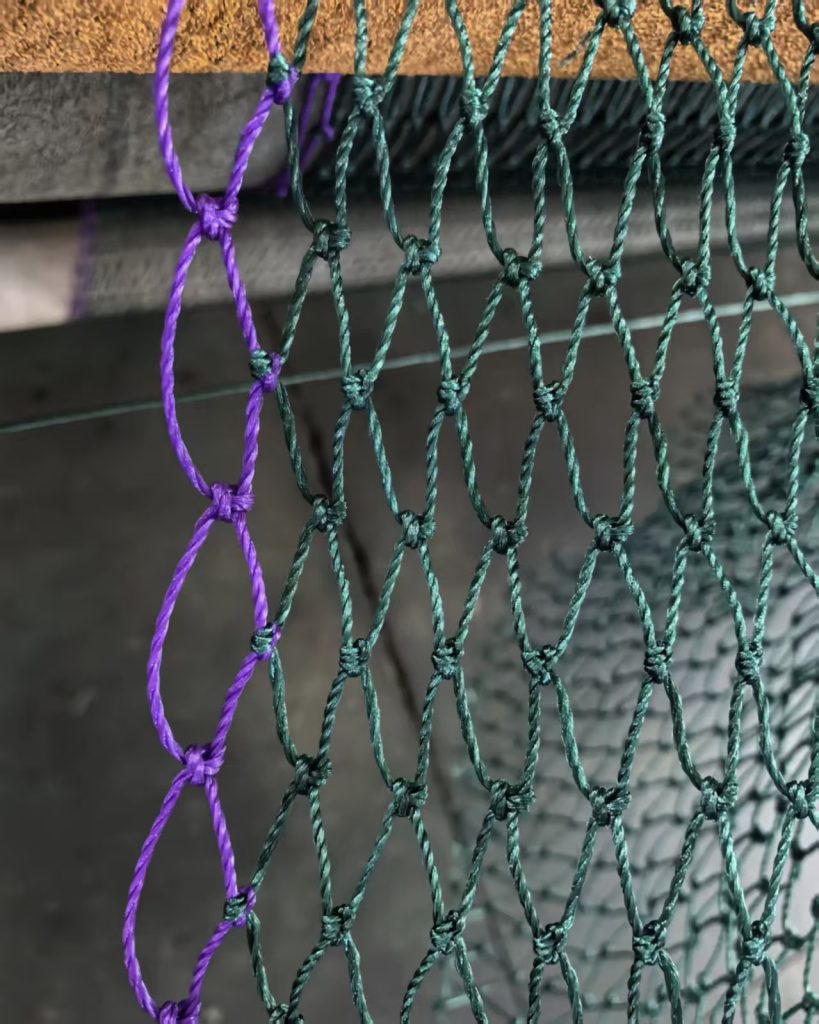
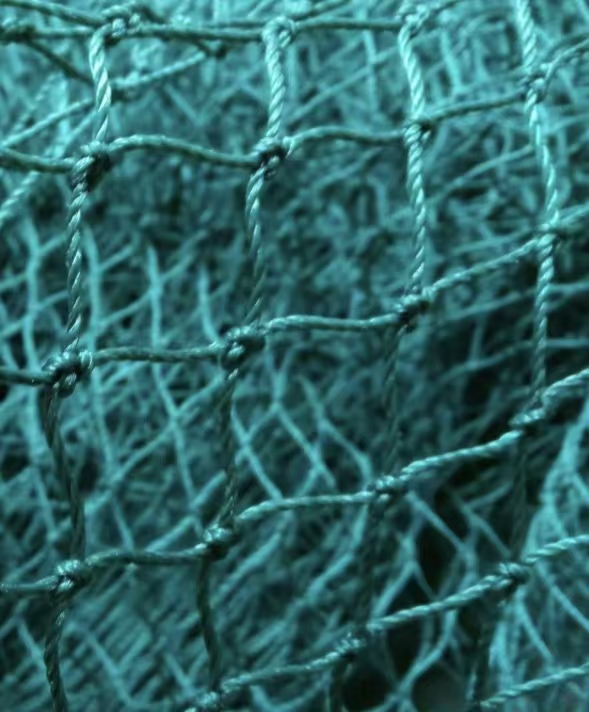
Water circulation is essential for healthy aquaculture systems.
Fish and other aquatic animals require sufficient oxygen and clean water. In cage farming, aquaculture netting PE must allow water to move through the cage efficiently.
If mesh openings become blocked by algae, sediment, or organic material, water exchange can decrease. This may affect oxygen levels and water quality inside the cage.
Therefore, choosing aquaculture netting PE is not simply about selecting the smallest possible mesh. The mesh should be large enough to provide effective water circulation while still preventing fish from escaping.
Balancing Mesh Size and Water Flow
A useful approach is to consider the relationship between fish size and required water exchange.
Smaller mesh provides better containment for juvenile fish but can increase resistance to water movement and may require more frequent cleaning. Larger mesh generally allows better water flow but may not provide adequate containment for small fish.
For this reason, many aquaculture farms use different aquaculture netting PE specifications during different stages of fish growth.
Aquaculture Netting PE for Different Environments
The operating environment can significantly affect the performance requirements of aquaculture netting PE.
Freshwater Aquaculture
Freshwater ponds, reservoirs, and lakes generally experience different environmental stresses than offshore farms. In many freshwater systems, the main concerns include algae, debris, fish activity, UV exposure, and abrasion.
Aquaculture netting PE for freshwater applications should provide sufficient strength while allowing good water exchange.
Marine Aquaculture
Marine aquaculture often places greater demands on netting. Waves, tides, currents, saltwater, marine organisms, and floating debris can increase mechanical stress.
For marine applications, aquaculture netting PE should ideally offer strong tensile performance, good UV resistance, and appropriate abrasion resistance.
Offshore Aquaculture
Offshore farming can involve particularly demanding conditions. Aquaculture netting PE used in offshore cages may experience continuous movement and dynamic loads.
In such environments, net strength, attachment methods, mesh stability, and maintenance planning become especially important.
Knotless and Knotted Aquaculture Netting PE
Aquaculture netting PE can be manufactured using different construction methods, including knotted and knotless designs.
Knotted Netting
Knotted aquaculture netting PE is a traditional option. The net is formed by connecting yarns using knots.
Advantages can include established manufacturing processes and good structural performance for many applications. However, knots can create additional contact points and may influence abrasion characteristics.
Knotless Netting
Knotless aquaculture netting PE uses a construction method without conventional knots.
Potential advantages include:
- Smooth surface
- Reduced friction against fish
- Lower risk of some types of abrasion
- Good flexibility
- Easy handling
The most suitable option depends on the fish species, cage design, net structure, and operating conditions.
| Feature | Knotted Aquaculture Netting PE | Knotless Aquaculture Netting PE |
| Construction | Knotted intersections | Knotless structure |
| Surface | More pronounced knots | Generally smoother |
| Flexibility | Depends on construction | Often highly flexible |
| Fish contact | Depends on knot design | Smooth surface can be beneficial |
| Application | General aquaculture | Fish cages and specialized applications |
Net Diameter and Load Requirements
Mesh size alone does not determine whether aquaculture netting PE is strong enough.
Net diameter is another important factor. Thicker netting can generally provide higher mechanical strength, although increased material thickness may also affect weight, flexibility, and water flow.
When selecting aquaculture netting PE, consider the relationship between:
- Mesh size
- Net diameter
- Breaking strength
- Cage dimensions
- Water current
- Wave conditions
- Fish biomass
- Installation method
A professional aquaculture netting PE manufacturer should be able to recommend an appropriate configuration based on the operating conditions.
Color Selection for Aquaculture Netting PE
Aquaculture netting PE is available in different colors depending on the manufacturer and application.
Color may influence visibility, maintenance inspection, and sunlight absorption. Dark-colored netting is commonly used in some aquaculture applications because it can provide good visual contrast and may be less visually noticeable in certain environments.
However, color should not be the primary selection factor. Material quality, strength, UV resistance, mesh size, and application suitability are generally more important.
When selecting aquaculture netting PE, choose the color based on practical operating requirements rather than appearance alone.
Abrasion Resistance and Durability
Aquaculture netting PE may come into contact with cages, ropes, frames, boats, feeding systems, and other equipment. Continuous movement can create friction and gradually damage the net.
Abrasion resistance is therefore particularly important in commercial systems.
For example, offshore cages may experience repeated movement caused by waves and currents. If the aquaculture netting PE constantly rubs against a structural component, localized wear may develop.
To improve service life:
- Select suitable net construction.
- Avoid sharp edges on cage structures.
- Check attachment points regularly.
- Inspect areas exposed to repeated movement.
- Repair small damaged areas before they become larger failures.
- Clean the net according to the manufacturer’s recommendations.
Aquaculture Netting PE Maintenance
Even high-quality aquaculture netting PE requires regular inspection and maintenance.
A maintenance program should include routine visual inspections and periodic cleaning. The frequency depends on water conditions, species, farming density, algae growth, and environmental exposure.
Common Maintenance Tasks
| Maintenance Task | Recommended Purpose |
| Visual inspection | Detect holes and damage |
| Mesh inspection | Check for deformation |
| Cleaning | Remove algae and fouling |
| Attachment inspection | Check ropes and fixing points |
| UV exposure assessment | Monitor outdoor aging |
| Repair | Prevent small damage from spreading |
| Replacement assessment | Maintain safe containment |
Regular maintenance can significantly improve the effective service life of aquaculture netting PE.
How to Compare Aquaculture Netting PE Suppliers
Choosing the right supplier is almost as important as choosing the right product.
A reliable aquaculture netting PE supplier should be able to provide detailed product information rather than only giving a price.
Before purchasing, ask the supplier about:
- PE material specifications
- Mesh size options
- Net diameter
- Breaking strength
- UV resistance
- Production process
- Available colors
- Custom sizes
- Packaging
- Quality control
- Sample availability
- Production lead time
A manufacturer with strong technical capabilities may also be able to customize aquaculture netting PE according to cage dimensions and application requirements.
Questions to Ask a Supplier
When requesting a quotation for aquaculture netting PE, provide as much information as possible.
For example:
What species will be farmed?
What is the approximate fish size?
What mesh size is required?
Is the application freshwater, coastal, or offshore?
What are the cage dimensions?
What level of water current is expected?
Does the net require UV stabilization?
What tensile strength is required?
The more complete the information, the easier it is for a supplier to recommend the appropriate aquaculture netting PE.
Cost vs. Service Life
Price is an important purchasing consideration, but the cheapest aquaculture netting PE is not necessarily the most economical choice.
A low-cost net may require more frequent replacement, cleaning, or repair. In contrast, a higher-quality aquaculture netting PE may have a higher initial purchase price but provide longer service life.
A simple total-cost comparison should consider:
| Cost Factor | Low-Cost Net | Higher-Quality Net |
| Initial purchase price | Lower | Higher |
| Expected durability | May be lower | Generally higher |
| Maintenance | Potentially higher | Potentially lower |
| Replacement frequency | Potentially higher | Potentially lower |
| Downtime risk | Potentially higher | Potentially lower |
| Long-term value | Depends on quality | Often better for demanding applications |
The best aquaculture netting PE is therefore the product that provides the right balance of performance, durability, maintenance requirements, and overall cost.
Common Mistakes When Buying Aquaculture Netting PE
Many problems with aquaculture netting PE can be avoided by planning carefully before purchasing.
Choosing Only by Price
Price should not be the only criterion. A low-quality product can create higher long-term costs through replacement and maintenance.
Selecting the Wrong Mesh Size
A mesh that is too large can increase escape risk, while a mesh that is too small can reduce water circulation and increase fouling.
Ignoring UV Resistance
Outdoor aquaculture netting PE is exposed to sunlight for long periods. Ignoring UV resistance can shorten the effective service life of the net.
Underestimating Environmental Loads
A net suitable for a calm freshwater pond may not be suitable for offshore farming.
Failing to Inspect the Net Regularly
Small holes and damaged attachment points can become serious problems if they are not discovered early.
Buying Without Technical Information
A professional supplier should be able to provide specifications for aquaculture netting PE, including material, mesh size, diameter, and strength.
How to Calculate Your Aquaculture Netting PE Requirements
Before ordering aquaculture netting PE, calculate the required net dimensions carefully.
For a simple rectangular fish enclosure, the required net area can be estimated by multiplying the length by the height and then adding the areas of other required sections.
For circular cages, the circumference and cage depth should be considered.
A basic planning table may look like this:
| Parameter | Example |
| Cage length | 20 m |
| Cage width | 10 m |
| Cage depth | 5 m |
| Required mesh | Based on fish size |
| Net material | PE |
| UV resistance | Recommended for outdoor use |
| Installation method | Rope or structural attachment |
The actual amount of aquaculture netting PE required depends on the cage design, overlap, attachment method, reinforcement areas, and whether additional predator protection is required.
It is recommended to confirm dimensions with the netting manufacturer before placing a large order.
Why Custom Aquaculture Netting PE Can Be Beneficial
Standard netting may be sufficient for some farms, but customized aquaculture netting PE can provide advantages for commercial projects.
Customization may include:
- Mesh size
- Net dimensions
- Net diameter
- Color
- Edge reinforcement
- Rope configuration
- Panel design
- Special attachment points
- Packaging
- Production length
For example, a large fish cage may require a specific net dimension that does not match standard products. A manufacturer can produce aquaculture netting PE according to the cage structure, reducing installation difficulties and unnecessary material waste.
Aquaculture Netting PE for Commercial Fish Farming
Large-scale commercial fish farming places greater demands on equipment reliability.
When fish biomass increases, the consequences of net failure can also become much more serious. Therefore, aquaculture netting PE for commercial operations should be selected based on actual operating conditions rather than general product descriptions.
Commercial farms should pay particular attention to:
- Net strength.
- Mesh consistency.
- UV resistance.
- Abrasion resistance.
- Water exchange.
- Cleaning requirements.
- Repairability.
- Supplier reliability.
- Production consistency.
- Long-term availability.
A consistent supply of aquaculture netting PE is also important for large farms that need to replace or expand net systems over time.
Aquaculture Netting PE for Predator Protection
Predators can cause significant losses in aquaculture operations. Birds, larger fish, mammals, and other animals may attempt to enter farming areas.
Aquaculture netting PE can be used as a physical barrier to reduce predator access.
The mesh size should be selected according to the predator species and the level of protection required. In some systems, a separate outer protection layer may be installed around the main fish cage.
Predator protection should not unnecessarily restrict water circulation. Therefore, the design should balance protection, airflow or water exchange, strength, and ease of maintenance.
Aquaculture Netting PE and Fish Safety
The quality and design of aquaculture netting PE can also influence fish welfare.
A suitable net should provide secure containment while minimizing unnecessary abrasion or injury during normal fish movement.
Factors that can affect fish safety include:
- Mesh shape
- Surface smoothness
- Net flexibility
- Net tension
- Mesh size
- Knot structure
- Damaged sections
- Fouling accumulation
Regular inspection is important because even high-quality aquaculture netting PE can become hazardous if it is damaged or improperly installed.
A Practical Aquaculture Netting PE Buying Checklist
Before placing an order, buyers can use the following checklist:
| Item | Key Question |
| Material | Is the net made from suitable PE material? |
| Mesh size | Is it appropriate for the target species? |
| Strength | Can it handle expected loads? |
| UV resistance | Is it suitable for outdoor exposure? |
| Abrasion resistance | Can it withstand contact and movement? |
| Water flow | Does the mesh allow sufficient circulation? |
| Dimensions | Does it fit the cage or pond? |
| Construction | Is knotted or knotless better for the application? |
| Customization | Can the supplier produce required sizes? |
| Quality control | Does the supplier provide consistent production? |
| Maintenance | Can the net be cleaned and repaired efficiently? |
| Cost | Is the total long-term cost reasonable? |
Using this checklist can help buyers avoid common purchasing mistakes and select aquaculture netting PE that matches their actual operating conditions.
If you need fishing gear or other services, please contact us!
Email: renqiangqiang001@outlook.com
WhatsApp: +86 15206862373
Instagram: https://www.instagram.com/qiangqiangr?igsh=emY0djk2a256eTI1&utm_source=qr
Conclusion
Choosing the best aquaculture netting PE requires careful consideration of material quality, mesh size, strength, UV resistance, abrasion resistance, water circulation, environmental conditions, and maintenance requirements. Aquaculture netting PE is an important part of modern fish farming systems, and the right product can help improve containment, operational efficiency, durability, and long-term cost performance.
The best aquaculture netting PE is not necessarily the thickest or most expensive option. Instead, it should match the species, cage structure, water conditions, environmental loads, and farming objectives.
Before purchasing aquaculture netting PE, buyers should clearly define their requirements and communicate them to an experienced manufacturer or supplier. Important specifications such as mesh size, net diameter, dimensions, material composition, UV stabilization, and tensile strength should be confirmed before production.
For farms operating in challenging marine or offshore environments, selecting durable aquaculture netting PE is especially important. For freshwater ponds and hatcheries, mesh size and water circulation may be the highest priorities. By matching the netting specifications to the actual application, aquaculture operators can achieve better performance and reduce unnecessary replacement and maintenance costs.
In short, selecting the right aquaculture netting PE is an investment in the reliability and efficiency of an aquaculture system. A well-designed netting solution can provide secure containment, support healthy water exchange, improve protection, and contribute to more stable long-term aquaculture production.
FAQ
What is aquaculture netting PE used for?
Aquaculture netting PE is mainly used to contain and protect farmed fish, shrimp, crabs, and other aquatic species. It can be used in fish cages, ponds, hatcheries, fish pens, offshore aquaculture systems, and predator protection structures. The appropriate aquaculture netting PE depends on the species, size, farming environment, and cage design.
How do I choose the correct mesh size for aquaculture netting PE?
The correct mesh size depends mainly on the size of the farmed species and the required level of water circulation. Smaller fish generally require smaller mesh, while larger fish can use larger mesh. When selecting aquaculture netting PE, the mesh should be small enough to prevent escape but large enough to maintain effective water exchange.
Is aquaculture netting PE suitable for marine aquaculture?
Yes. Aquaculture netting PE can be used for many marine aquaculture applications. However, marine and offshore farms should select aquaculture netting PE with suitable tensile strength, UV resistance, flexibility, and abrasion resistance. Environmental conditions such as waves, currents, and cage movement should also be considered.
How long does aquaculture netting PE last?
The service life of aquaculture netting PE depends on material quality, UV exposure, water conditions, abrasion, cleaning practices, installation, and maintenance. UV-stabilized aquaculture netting PE that is properly installed and regularly inspected can generally provide better long-term performance than low-quality netting exposed to severe conditions.
Can aquaculture netting PE be customized?
Yes. Many aquaculture netting PE manufacturers can customize mesh size, net dimensions, diameter, color, edge reinforcement, rope configuration, and other specifications. Customized aquaculture netting PE can be especially useful for commercial fish cages, specialized ponds, hatcheries, and large-scale aquaculture projects where standard net dimensions may not fit the installation requirements.