

Introduction
An Agricultural Shade Nets Manufacturer for Crop Protection provides an important solution for farmers, greenhouse operators, nurseries, horticultural businesses, and agricultural distributors looking for practical ways to protect crops from excessive sunlight, heat, wind, insects, and challenging environmental conditions. Modern agriculture increasingly depends on controlled growing environments, and shade nets have become a useful tool for managing light intensity and creating more favorable conditions for plants.
Choosing an Agricultural Shade Nets Manufacturer for Crop Protection is important because the quality, density, material, structure, and design of a shade net can directly influence how effectively it performs in agricultural applications. Different crops require different levels of sunlight, ventilation, temperature control, and protection. A suitable shade net therefore needs to match the specific growing environment and crop requirements.
An experienced Agricultural Shade Nets Manufacturer for Crop Protection can provide different shade rates, colors, widths, lengths, materials, edge treatments, and installation options. Some farms require lightweight nets for seasonal use, while others need durable agricultural shade nets that can remain installed for long periods.
Agricultural shade nets are used in vegetable production, fruit cultivation, flower growing, nurseries, greenhouse farming, seedling production, and many other agricultural applications. They can also be used for protecting young plants during periods of strong sunlight or extreme heat.
This article explains the role of an Agricultural Shade Nets Manufacturer for Crop Protection, the main benefits of agricultural shade nets, important material and design considerations, applications, customization options, installation methods, quality control, and factors buyers should consider when selecting a reliable manufacturer.
What Is an Agricultural Shade Nets Manufacturer for Crop Protection?
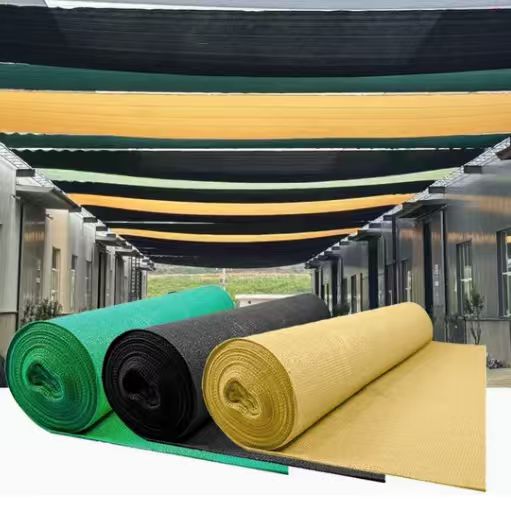
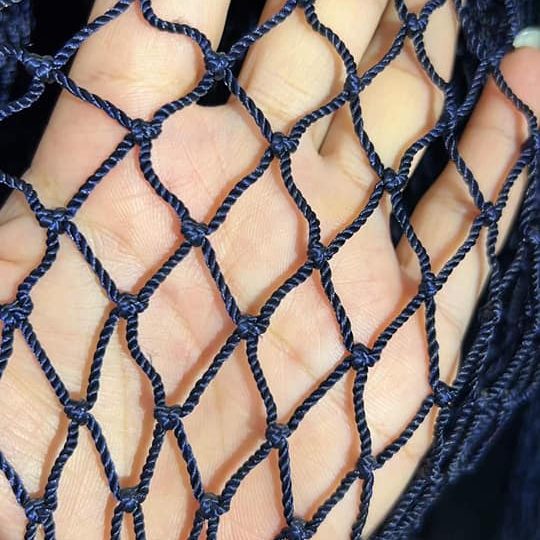
An Agricultural Shade Nets Manufacturer for Crop Protection specializes in producing shade netting designed for agricultural environments. These manufacturers typically use synthetic materials such as polyethylene or other suitable polymer materials to create nets with different densities and shading levels.
The purpose of agricultural shade nets is not simply to block sunlight. A well-designed net can help manage the amount of light reaching plants while allowing airflow through the growing area.
An Agricultural Shade Nets Manufacturer for Crop Protection can develop products for different agricultural conditions. For example, a greenhouse nursery may need a relatively light shade net, while crops exposed to intense sunlight may require a higher shading percentage.
The correct product depends on several factors:
- Crop type
- Local climate
- Sunlight intensity
- Growing season
- Greenhouse structure
- Installation location
- Desired shade percentage
- Wind conditions
- Required durability
- Expected service period
Manufacturers may offer different knitting structures and shade rates to meet these requirements.
Common Agricultural Shade Net Specifications
| Specification | Common Options |
|---|---|
| Matériau | HDPE and other suitable polymers |
| Shade rate | Different percentages according to application |
| Couleur | Black, green, white, and other options |
| Width | Customized or standard widths |
| Length | Roll or custom length |
| Edge | Reinforced or standard edge |
| Structure | Knitted or woven designs |
| UV treatment | Available depending on product |
| Candidature | Greenhouse, nursery, field crops, gardens |
An Agricultural Shade Nets Manufacturer for Crop Protection should help customers choose a specification based on actual agricultural requirements rather than simply selecting the highest shade rate.
Why Crop Protection Matters in Modern Agriculture
Crop production depends heavily on environmental conditions. Plants require sunlight for photosynthesis, but excessive sunlight can create problems for some crops.
Strong solar radiation can increase leaf temperature and moisture loss. In certain growing environments, excessive heat can create stress for plants and affect growth.
An Agricultural Shade Nets Manufacturer for Crop Protection provides products that can help farmers manage solar exposure.
Shade nets can reduce the intensity of sunlight reaching plants. Depending on the net’s design and shade percentage, they can create a more controlled microclimate.
Crop protection can also involve reducing exposure to wind and certain environmental stresses. When used appropriately, agricultural shade nets can become part of a broader crop management strategy.
However, shade nets should not be treated as a universal solution. Every crop has different light requirements, and excessive shading can also reduce the amount of light available for photosynthesis.
For this reason, working with an experienced Agricultural Shade Nets Manufacturer for Crop Protection can help buyers identify products that are more appropriate for their intended use.
Main Benefits of Agricultural Shade Nets
Agricultural shade nets can provide several practical benefits.
Sunlight Management
One of the primary functions of agricultural shade nets is managing sunlight. Different crops have different light requirements, so shade nets can help reduce excessive exposure.
The amount of shade should be selected according to crop characteristics and local growing conditions.
Heat Management
Reducing direct solar radiation can help lower the temperature around plants under certain conditions. This can be particularly useful in greenhouses and nurseries during hot periods.
Wind Reduction
Shade nets can also influence airflow. Depending on their structure and installation, they may reduce the direct impact of strong winds on plants.
Plant Protection
Young seedlings and delicate plants can be sensitive to harsh environmental conditions. Shade nets can create a more moderate growing environment.
Better Growing Conditions
By controlling environmental exposure, shade nets can contribute to more stable growing conditions when used as part of a broader crop management plan.
Flexible Agricultural Applications
Agricultural shade nets can be installed over greenhouses, nurseries, growing tunnels, outdoor crops, and other agricultural areas.
An Agricultural Shade Nets Manufacturer for Crop Protection can provide different products for these applications.
Agricultural Shade Nets Manufacturer for Crop Protection and Shade Rates
Shade percentage is one of the most important specifications when selecting agricultural shade netting.
A shade rate describes the approximate amount of sunlight blocked by the net under specified conditions. Different shade levels are suitable for different applications.
For example, crops that require substantial sunlight may need a lower shade rate, while shade-tolerant plants may require a higher level.
Example Shade Rate Applications
| Niveau d'ombrage | Potential Application |
|---|---|
| Low shade | Light-sensitive crops and general plant protection |
| Medium shade | Nurseries and many horticultural crops |
| Higher shade | Shade-loving plants and strong-sun environments |
| Very high shade | Specialized applications requiring substantial light reduction |
The exact shade rate required depends on the crop, climate, growing structure, season, and local sunlight conditions.
An Agricultural Shade Nets Manufacturer for Crop Protection should not recommend a shade percentage based only on general assumptions. Buyers should provide information about their crop and growing environment.
Material Selection for Agricultural Shade Nets
Material quality strongly influences the durability and performance of agricultural shade nets.
HDPE is commonly used for agricultural shade netting because it can provide a useful combination of strength, flexibility, and outdoor durability.
An Agricultural Shade Nets Manufacturer for Crop Protection may use different material formulations depending on the intended product.
Material selection can influence:
- Tensile strength
- Résistance aux UV
- Flexibilité
- Poids
- Service life
- Weather resistance
- Installation convenience
- Coût
Agricultural shade nets installed outdoors are exposed to sunlight, rain, wind, dust, and temperature changes. UV resistance can therefore be an important consideration.
A net with suitable UV stabilization may maintain its performance longer than a product without appropriate UV protection.
Comparaison des matériaux
| Material Feature | Importance |
|---|---|
| Résistance aux UV | Helps withstand prolonged sunlight |
| Tensile strength | Supports durability during installation and use |
| Flexibilité | Makes installation easier |
| Structure légère | Reduces handling difficulty |
| Weather resistance | Supports outdoor use |
| Consistent knitting | Helps maintain uniform shading |
An Agricultural Shade Nets Manufacturer for Crop Protection should provide clear information about the material and intended application.
Greenhouse Applications
Greenhouses are one of the most common environments for agricultural shade nets.
A greenhouse can trap heat, especially under strong sunlight. Excessive heat can create difficult growing conditions for some plants.
An Agricultural Shade Nets Manufacturer for Crop Protection can supply shade nets that are installed above, inside, or around greenhouse structures depending on the design.
Internal shade nets may be used to reduce direct radiation reaching plants. External systems may reduce solar exposure before sunlight enters the greenhouse.
The choice depends on greenhouse structure, climate, crop type, and installation requirements.
Greenhouse Shade Net Considerations
| Facteur | Question |
|---|---|
| Installation | Internal or external? |
| Shade rate | How much sunlight should be reduced? |
| Matériau | Is the net suitable for long-term exposure? |
| Size | Does it fit the greenhouse structure? |
| Fixing | What installation system will be used? |
| Ventilation | Will airflow remain adequate? |
| Entretien | Can the net be removed or adjusted easily? |
An Agricultural Shade Nets Manufacturer for Crop Protection should be able to discuss these factors with greenhouse operators.
Nursery Applications
Nurseries often grow young plants that are more sensitive to environmental stress than established crops.
Seedlings may require protection from intense sunlight while they develop stronger root systems and foliage.
An Agricultural Shade Nets Manufacturer for Crop Protection can provide nursery shade nets designed for different levels of sunlight reduction.
Nursery operators may need different shade levels depending on the plant species.
For example, ornamental plants, vegetables, flowers, and tree seedlings can have different light requirements.
A flexible shade net system can allow nursery operators to adjust protection according to plant development.
Agricultural Shade Nets for Vegetable Farming
Vegetable production can benefit from controlled growing conditions.
Vegetables may be sensitive to heat, strong sunlight, and rapid moisture loss, depending on the species and growth stage.
An Agricultural Shade Nets Manufacturer for Crop Protection can provide shade netting for vegetable farms that need additional environmental control.
Potential applications include:
- Leafy vegetables
- Semis
- Herbs
- Tomates
- Peppers
- Cucumbers
- Nursery plants
- Specialty vegetables
The correct shade rate depends on the crop and growing conditions.
Farmers should avoid assuming that maximum shade provides maximum crop protection. Too much shade may reduce photosynthesis and affect plant development.
The goal is to create an appropriate balance between sunlight and protection.
Agricultural Shade Nets for Fruit Cultivation
Fruit crops can also require protection from intense sunlight and environmental conditions.
Depending on the crop and production method, agricultural shade nets may be used to reduce excessive radiation, protect young plants, or create more controlled growing environments.
An Agricultural Shade Nets Manufacturer for Crop Protection can customize net dimensions to match orchards, tunnels, support structures, or other agricultural systems.
Fruit growers may also use shade nets in nurseries before transplanting young plants into larger growing areas.
The net should be selected based on the crop’s biological requirements and local climate.
Agricultural Shade Nets for Flower Production
Flowers and ornamental plants can have specific light requirements.
Some plants prefer strong sunlight, while others grow better under filtered or reduced light.
An Agricultural Shade Nets Manufacturer for Crop Protection can supply nets with different shade rates to accommodate different ornamental crops.
Flower growers may also value color and appearance because the shade net can become part of the visual environment of a nursery or greenhouse.
In some applications, green or white shade nets may be selected based on aesthetic and functional preferences.
The most important consideration remains whether the net provides the appropriate growing conditions.
Customization From an Agricultural Shade Nets Manufacturer for Crop Protection
Customization is important for agricultural businesses because farms and greenhouses come in different sizes and configurations.
An Agricultural Shade Nets Manufacturer for Crop Protection may provide custom widths, lengths, shade percentages, colors, edge reinforcement, and packaging.
Customization can reduce material waste and make installation easier.
Common Customization Options
| Custom Feature | Available Options |
|---|---|
| Width | Standard or custom width |
| Length | Custom roll length |
| Shade percentage | Multiple levels |
| Couleur | Black, green, white, and others |
| Edge | Reinforced or standard |
| Eyelets | Optional depending on design |
| UV treatment | Available for outdoor applications |
| Packaging | Custom roll or bale packaging |
| Labeling | Private label options may be available |
For large agricultural projects, customized dimensions can help reduce the need to cut large rolls on-site.
Agricultural Shade Nets Manufacturer for Crop Protection and Wind Protection
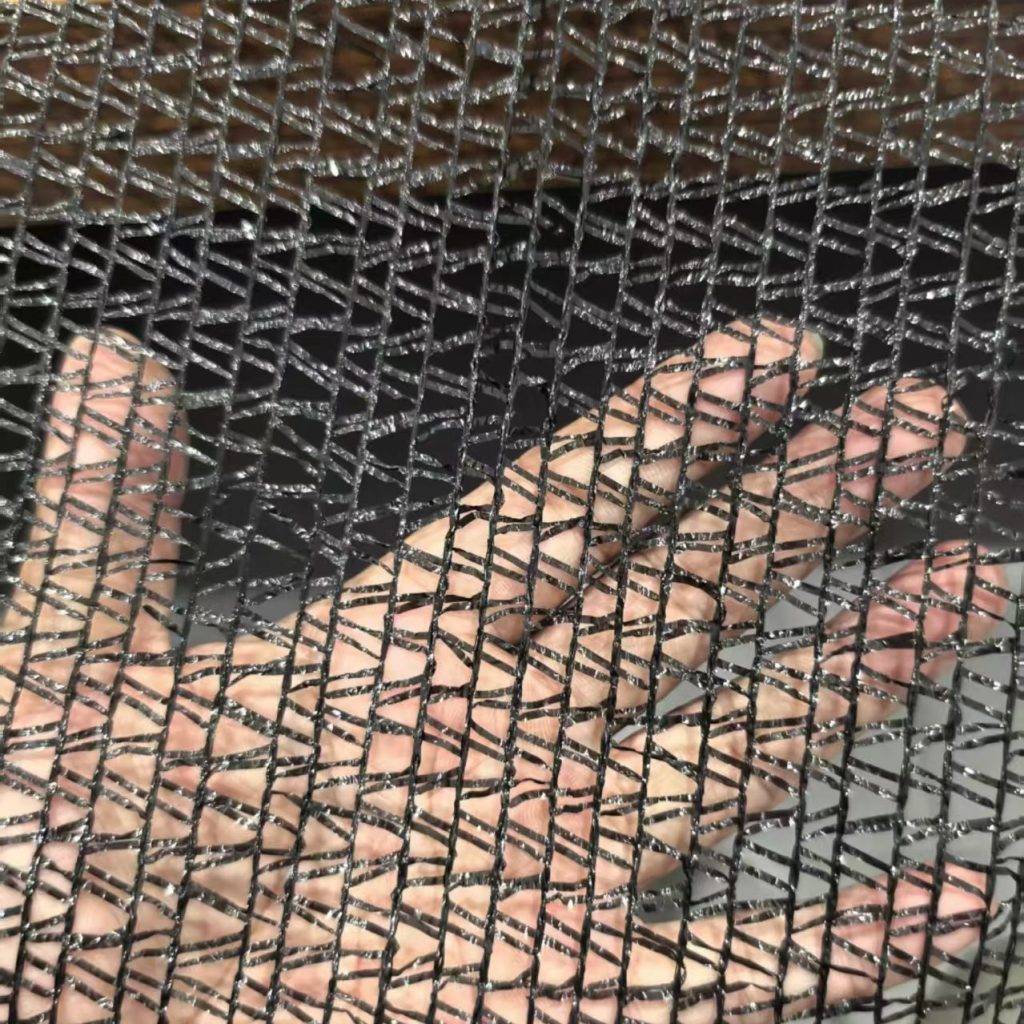
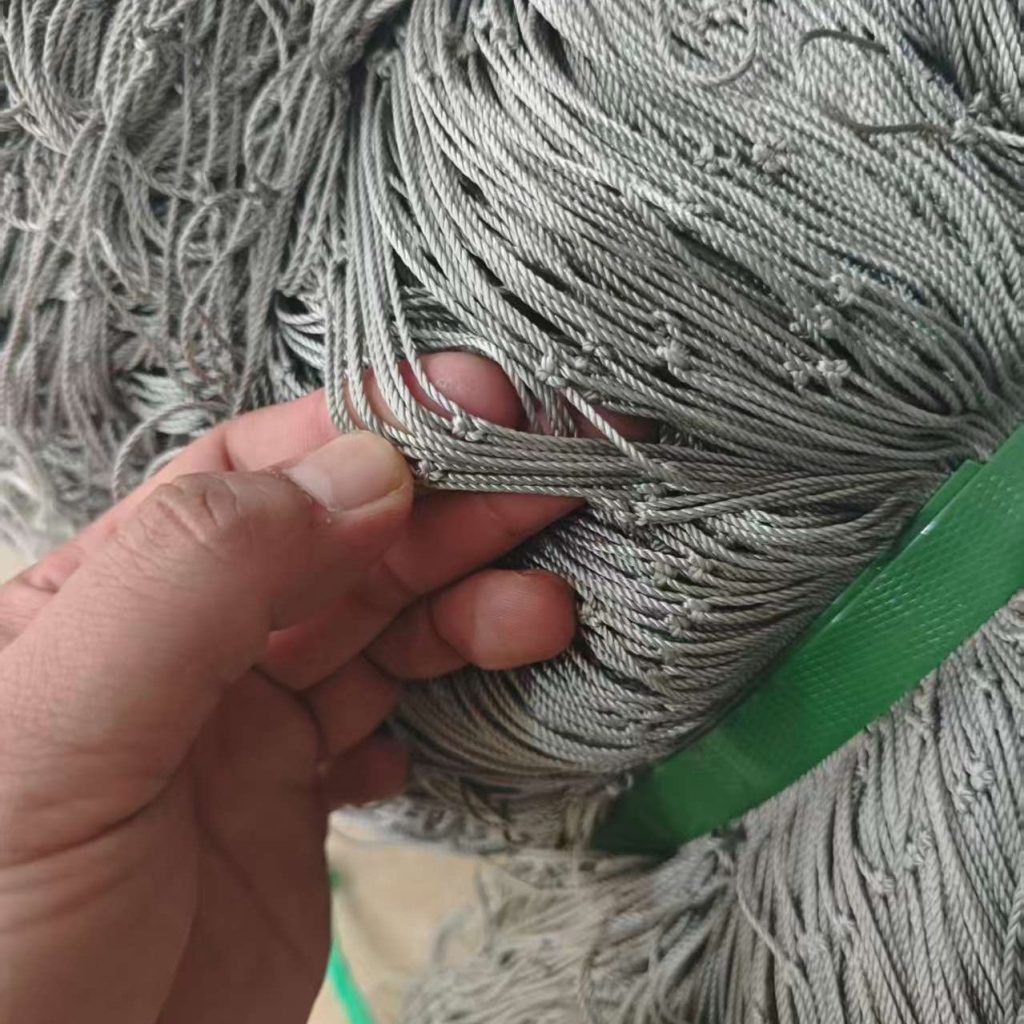
Wind can damage crops by breaking stems, removing leaves, and drying plants.
Agricultural shade nets can influence airflow and reduce direct wind exposure when appropriately installed.
An Agricultural Shade Nets Manufacturer for Crop Protection can provide net structures with different openness and densities.
However, wind protection should be carefully designed because completely blocking airflow may create other problems.
Good agricultural design often aims to reduce excessive wind while maintaining enough ventilation.
The installation structure also matters. Strong winds can place significant force on the net and support system.
For outdoor installations, farmers should ensure that poles, wires, clips, ropes, and attachment points are appropriate for the expected conditions.
UV Protection and Outdoor Durability
UV exposure is one of the biggest challenges for outdoor agricultural products.
Continuous sunlight can gradually degrade polymer materials if they are not properly stabilized.
An Agricultural Shade Nets Manufacturer for Crop Protection can use UV-stabilized materials designed for outdoor agricultural applications.
The actual service life depends on many factors, including:
- UV intensity
- Climate
- Material formulation
- Shade net quality
- Installation method
- Wind exposure
- Entretien
- Duration of use
Buyers should ask manufacturers about the intended outdoor application and available UV treatment.
It is also important to avoid making unrealistic assumptions about service life. Actual performance depends on environmental conditions.
Quality Control in Agricultural Shade Net Manufacturing
Quality control is essential for agricultural shade net production.
A professional Agricultural Shade Nets Manufacturer for Crop Protection should inspect raw materials, production processes, finished netting, dimensions, and packaging.
Important quality indicators can include shade consistency, fabric strength, dimensions, knitting quality, edge finishing, color consistency, and UV treatment.
Quality Control Process
| Production Stage | Quality Check |
|---|---|
| Raw material | Material specification |
| Extrusion | Polymer quality |
| Yarn production | Thickness and consistency |
| Knitting | Structure and density |
| Cutting | Width and length |
| Edge finishing | Reinforcement quality |
| Final inspection | Appearance and specifications |
| Packaging | Roll condition and labeling |
Consistent manufacturing is particularly important for large agricultural projects.
If shade rates vary significantly across different parts of the same product, the growing environment may not receive consistent protection.
Strength and Durability
Agricultural shade nets need sufficient strength for their intended application.
A net installed over a greenhouse may experience different mechanical forces compared with a small nursery net.
An Agricultural Shade Nets Manufacturer for Crop Protection should consider tensile strength, tear resistance, edge strength, and attachment requirements.
The installation method can also influence durability.
For example, if the net is attached too tightly, excessive tension may increase stress on the fabric. If it is installed loosely in a high-wind environment, movement may increase wear.
Proper installation is therefore as important as product quality.
Installation of Agricultural Shade Nets
Correct installation helps agricultural shade nets perform effectively.
Before installation, users should measure the coverage area and identify the support structure.
Common installation accessories may include:
- Cordes
- Clips
- Hooks
- Wires
- Cable systems
- Support poles
- Fixing straps
- Reinforced edges
The exact method depends on the application.
Basic Installation Steps
- Measure the installation area.
- Select a suitable shade net.
- Prepare the support structure.
- Position the net correctly.
- Attach the edges securely.
- Check tension.
- Inspect for gaps.
- Confirm ventilation.
- Check all fixing points.
- Monitor the installation after strong weather.
An Agricultural Shade Nets Manufacturer for Crop Protection can provide product information and installation recommendations based on the specific net design.
Maintenance of Agricultural Shade Nets
Maintenance can help extend the useful life of agricultural shade nets.
Farmers should periodically inspect the net for tears, loose edges, damaged fixing points, and excessive wear.
Dirt and debris may accumulate on some installations. Cleaning requirements depend on the material and application.
If a small tear is detected, repairing it early may prevent the damage from becoming larger.
Liste de contrôle d'entretien
| Tâche de maintenance | Recommended Purpose |
|---|---|
| Inspect fabric | Identify tears and wear |
| Check edges | Prevent separation |
| Check fixing points | Maintain secure installation |
| Inspect support structure | Reduce structural risks |
| Remove debris | Maintain appropriate airflow |
| Check tension | Reduce unnecessary stress |
| Replace damaged sections | Maintain crop protection |
Regular inspection is particularly useful before periods of strong wind or severe weather.
How to Choose an Agricultural Shade Nets Manufacturer for Crop Protection
Selecting a manufacturer requires careful evaluation.
A reliable Agricultural Shade Nets Manufacturer for Crop Protection should be able to provide clear information about material, shade percentage, dimensions, UV treatment, strength, production capacity, and customization.
Buyers should also evaluate communication and quality control.
Manufacturer Selection Checklist
| Evaluation Factor | What Buyers Should Check |
|---|---|
| Product experience | Agricultural shade net specialization |
| Matériau | Type and quality |
| Shade options | Available shade percentages |
| Personnalisation | Sizes, colors, edge options |
| UV protection | Outdoor suitability |
| Quality control | Inspection process |
| Production capacity | Ability to fulfill orders |
| Packaging | Roll and shipping protection |
| Samples | Availability before bulk orders |
| Communication | Response and technical support |
A sample can be particularly useful for large purchases. It allows buyers to examine the fabric, shade density, dimensions, edge finishing, and overall construction.
Cost Factors for Agricultural Shade Nets
Price depends on many factors.
An Agricultural Shade Nets Manufacturer for Crop Protection may calculate pricing based on material, weight, shade percentage, size, color, UV treatment, edge reinforcement, order quantity, packaging, and customization.
Main Cost Factors
| Facteur de coût | Possible Impact |
|---|---|
| Matériau | Different materials affect cost |
| Poids | More material can increase price |
| Shade rate | Different structures may have different costs |
| Size | Larger dimensions require more material |
| UV treatment | Can add material cost |
| Edge reinforcement | Adds production work |
| Couleur | Special colors may affect production |
| Quantity | Larger orders may reduce unit cost |
| Packaging | Custom packaging can add cost |
Buyers should consider total value rather than selecting a product solely because it has the lowest price.
A low-cost net that fails quickly may create additional replacement and labor costs.
Agricultural Shade Nets Manufacturer for Crop Protection and Large-Scale Farming
Large agricultural projects require consistent products and reliable supply.
An Agricultural Shade Nets Manufacturer for Crop Protection serving large farms may need to provide substantial quantities of netting with consistent specifications.
For large orders, buyers should confirm:
- Production capacity
- Lead time
- Material availability
- Quality standards
- Packaging method
- Shipping arrangements
- Replacement policies
- Reorder consistency
Consistency is especially important when the same product is installed across large greenhouse areas.
Different batches should maintain similar specifications so that the crop receives predictable environmental protection.
Packaging and Transportation
Agricultural shade nets are often supplied in rolls or compressed packages.
Packaging should protect the net from unnecessary damage during handling and transportation.
An Agricultural Shade Nets Manufacturer for Crop Protection may provide labels containing information such as product specifications, roll dimensions, quantity, or customer details.
For international shipments, packaging should also be suitable for long-distance transportation.
Packaging Considerations
| Facteur | Importance |
|---|---|
| Roll protection | Prevents physical damage |
| Moisture protection | Helps protect during transport |
| Labeling | Supports identification |
| Weight marking | Helps logistics handling |
| Carton or bale | Depends on order requirements |
| Custom packaging | Supports branding and distribution |
Good packaging can make receiving and warehouse management easier for agricultural distributors.
Private Label Agricultural Shade Nets
Distributors and agricultural supply companies may want to sell shade nets under their own brand names.
Some Agricultural Shade Nets Manufacturer for Crop Protection suppliers can support private-label production.
Private-label options may include:
- Custom labels
- Printed packaging
- Branded rolls
- Product tags
- Custom cartons
- Customized product specifications
This allows distributors to create their own agricultural product lines while relying on an experienced manufacturer for production.
Before beginning private-label production, businesses should confirm minimum quantities, artwork requirements, packaging specifications, and lead times.
Agricultural Shade Nets for Different Climates
Climate is a major factor when selecting agricultural shade netting.
Hot regions with strong sunlight may require different shade levels compared with cooler areas.
Humid climates may create different ventilation requirements. Windy regions may require stronger installation systems.
An Agricultural Shade Nets Manufacturer for Crop Protection can provide different product options for different environmental conditions.
Climate Considerations
| Climate Condition | Important Consideration |
|---|---|
| Hot and sunny | Sunlight and heat management |
| Windy | Strength and secure installation |
| Humid | Ventilation and material suitability |
| Dry | Moisture loss and sunlight exposure |
| Rainy | Drainage and support structure |
| High UV | UV-stabilized material |
There is no single agricultural shade net that is perfect for every climate.
The product should be selected according to the combination of crop, climate, structure, and expected usage.
Common Mistakes When Buying Agricultural Shade Nets
Buyers can encounter problems when they focus only on price or shade percentage.
One common mistake is choosing a shade rate without considering the crop’s light requirements.
Another mistake is buying a net that is too weak for the installation environment.
Some buyers may also overlook UV treatment, edge reinforcement, or installation requirements.
Common Buying Mistakes
| Mistake | Potential Result |
|---|---|
| Choosing shade rate without crop analysis | Insufficient or excessive shading |
| Ignoring UV resistance | Shorter outdoor service life |
| Selecting weak material | Increased risk of damage |
| Poor measurements | Coverage problems |
| Weak installation | Wind-related damage |
| Buying only by price | Possible quality problems |
| Skipping samples | Unexpected product differences |
Working with an experienced Agricultural Shade Nets Manufacturer for Crop Protection can help buyers avoid many of these issues.
Agricultural Shade Nets Manufacturer for Crop Protection and Sustainable Farming
Agricultural shade nets can be part of a broader strategy for efficient resource management.
By helping manage environmental conditions, shade nets may support more controlled crop production. However, their effectiveness depends on proper design and installation.
Sustainable agriculture involves many factors, including water management, soil health, energy use, material efficiency, crop selection, and waste reduction.
Shade nets should therefore be considered one tool within a larger agricultural management system.
Manufacturers can also contribute by improving material efficiency, reducing production waste, optimizing packaging, and developing durable products that remain useful for longer periods.
Future Development of Agricultural Shade Nets
The agricultural shade net industry continues to evolve as farming systems become more specialized.
Future products may focus on improved UV resistance, more precise light management, stronger materials, easier installation, and better customization.
Agricultural producers may also demand shade nets designed specifically for certain crops or climate conditions.
An Agricultural Shade Nets Manufacturer for Crop Protection can respond to these market needs through research, product development, and customer feedback.
The combination of agricultural technology, greenhouse management, irrigation systems, environmental sensors, and shade netting can create increasingly controlled growing environments.
Shade nets may therefore remain an important component of modern horticulture and protected agriculture.
How to Work With an Agricultural Shade Nets Manufacturer for Crop Protection
Successful cooperation begins with clear communication.
Buyers should provide information about the application, dimensions, crop type, location, climate, shade requirements, expected quantity, and installation method.
The manufacturer can then recommend suitable specifications.
A typical purchasing process may include:
- Discussing application requirements.
- Confirming product specifications.
- Requesting samples.
- Reviewing material and shade performance.
- Confirming dimensions.
- Approving packaging.
- Placing the production order.
- Conducting quality inspections.
- Preparing shipment.
- Receiving and installing the product.
Clear communication reduces the risk of misunderstandings.
For large agricultural projects, written specifications are particularly useful because they provide a reference for future orders.
Si vous avez besoin de matériel de pêche ou d'autres services, n'hésitez pas à nous contacter !
E-mail : renqiangqiang001@outlook.com
WhatsApp : +86 15206862373
Instagram : https://www.instagram.com/qiangqiangr?igsh=emY0djk2a256eTI1&utm_source=qr
Conclusion
An Agricultural Shade Nets Manufacturer for Crop Protection provides important products for farmers, greenhouse operators, nurseries, horticultural businesses, distributors, and agricultural projects. Agricultural shade nets can help manage sunlight and create more suitable growing conditions when properly selected and installed.
The right Agricultural Shade Nets Manufacturer for Crop Protection can offer different shade rates, materials, dimensions, colors, UV treatments, edge reinforcements, and packaging options. These choices allow agricultural businesses to select products according to their crop, climate, growing structure, and application.
Quality is one of the most important considerations. Material strength, UV resistance, consistent shade density, accurate dimensions, reliable edge finishing, and proper packaging can all influence product performance.
Buyers should also consider installation and maintenance. Even a high-quality agricultural shade net may perform poorly if it is installed incorrectly or exposed to conditions beyond its intended application.
For farms and agricultural distributors, working with an experienced Agricultural Shade Nets Manufacturer for Crop Protection can make product selection and large-scale purchasing more efficient. A professional manufacturer can support customization, quality control, packaging, and long-term supply requirements.
As protected agriculture and controlled growing environments continue to develop, agricultural shade nets will remain a useful tool for managing environmental conditions. By selecting suitable products and applying them correctly, farmers can create more controlled growing environments for a wide range of crops.
FAQ
What does an Agricultural Shade Nets Manufacturer for Crop Protection produce?
An Agricultural Shade Nets Manufacturer for Crop Protection produces shade netting designed for agricultural applications such as greenhouses, nurseries, vegetable farms, fruit cultivation, flower production, and seedling protection. Products may be available in different shade rates, colors, widths, lengths, materials, and edge configurations.
How do agricultural shade nets help protect crops?
Agricultural shade nets can reduce excessive sunlight exposure and help create more moderate growing conditions. Depending on the product and installation method, they may also help reduce direct wind exposure and environmental stress. The appropriate shade level depends on the crop, climate, season, and growing environment.
How should I choose an Agricultural Shade Nets Manufacturer for Crop Protection?
When choosing an Agricultural Shade Nets Manufacturer for Crop Protection, buyers should evaluate material quality, shade rate options, UV resistance, product strength, customization capabilities, production capacity, quality control, packaging, and communication. Requesting samples before placing a large order can also help buyers evaluate the product.
Can an Agricultural Shade Nets Manufacturer for Crop Protection provide customized sizes?
Yes, an Agricultural Shade Nets Manufacturer for Crop Protection can often provide customized widths, lengths, shade percentages, colors, edge reinforcement, packaging, and other specifications. The available options depend on the manufacturer’s production capabilities and order requirements.
Are agricultural shade nets suitable for greenhouse farming?
Yes, agricultural shade nets are commonly used in greenhouse environments to help manage sunlight and temperature conditions. The correct shade percentage and installation method depend on the crop, greenhouse structure, local climate, and desired growing conditions. Proper ventilation should also be considered when installing shade nets.