

Introducción
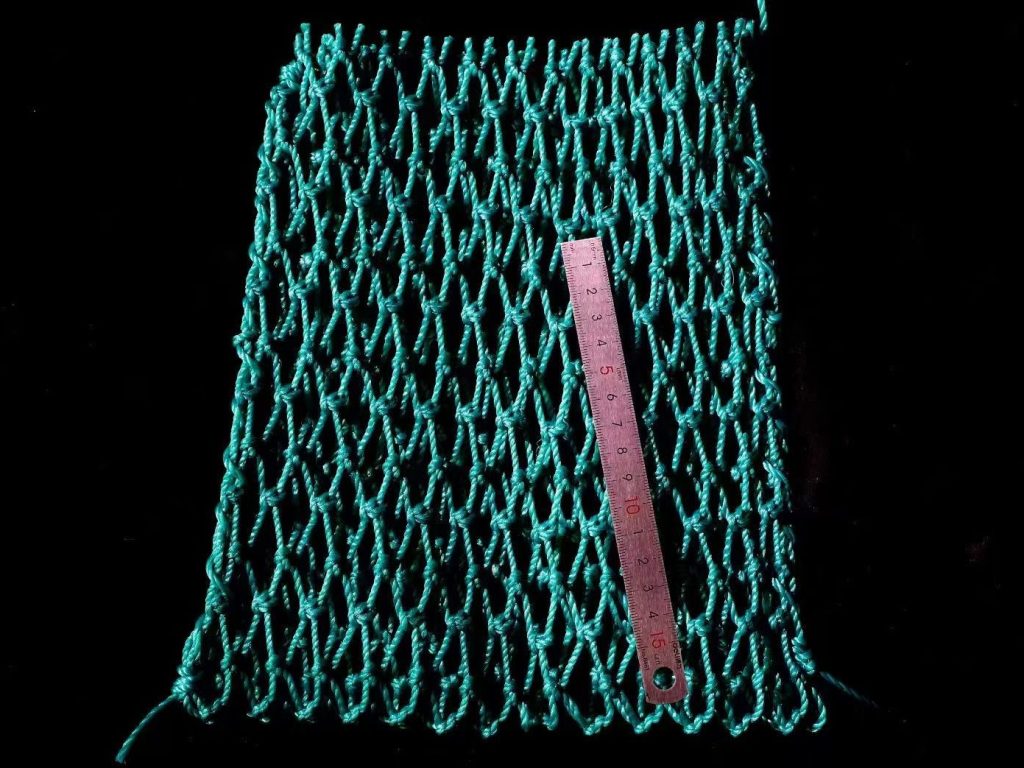
Heavy Duty PE Netting is widely used in agriculture, aquaculture, construction, transportation, sports, industrial protection, landscaping, and other demanding applications. As global buyers increasingly look for durable, flexible, and cost-effective netting solutions, Heavy Duty PE Netting has become an important choice for projects that require reliable performance under repeated use and challenging environmental conditions.
Choosing the right Heavy Duty PE Netting is not simply a matter of selecting the thickest or strongest product available. Different projects require different combinations of mesh size, material quality, yarn diameter, tensile strength, UV resistance, dimensions, weight, flexibility, and finishing. A netting product designed for agricultural protection may have very different requirements from Heavy Duty PE Netting used for aquaculture cages, cargo protection, or industrial applications.
For distributors, wholesalers, contractors, agricultural suppliers, and other B2B buyers, understanding these differences is essential. A suitable Heavy Duty PE Netting product can improve project reliability, reduce replacement frequency, simplify installation, and provide better long-term value.
This buying guide explains the major factors global buyers should consider when purchasing Heavy Duty PE Netting. It covers material selection, construction, strength, mesh size, UV resistance, customization, applications, quality control, supplier evaluation, packaging, pricing, and bulk purchasing.
What Is Heavy Duty PE Netting?
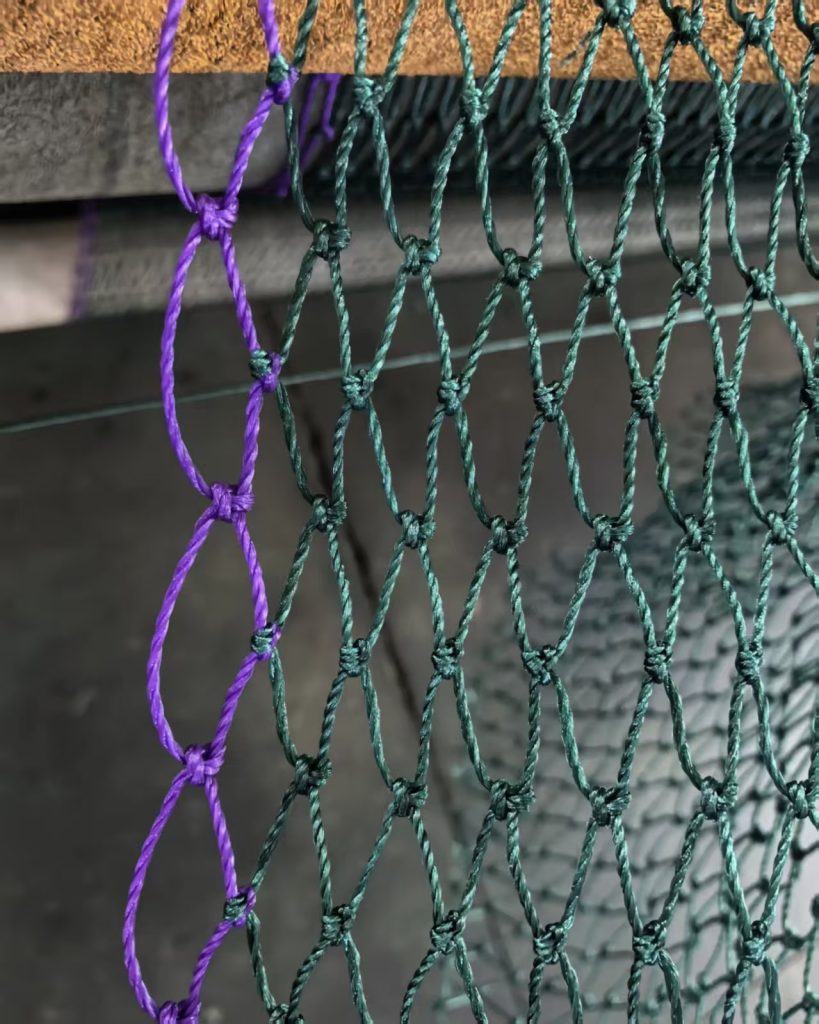
Heavy Duty PE Netting is a reinforced netting product made primarily from polyethylene, commonly abbreviated as PE. Compared with lightweight general-purpose netting, Heavy Duty PE Netting is designed for applications that require greater durability, stronger construction, and better resistance to mechanical stress.
Polyethylene is widely used in netting because it offers a useful combination of low weight, flexibility, moisture resistance, and durability. Depending on the manufacturing process and product design, Heavy Duty PE Netting can be produced with different yarn structures, mesh sizes, thicknesses, colors, and dimensions.
The term “heavy duty” generally refers to the product’s intended performance level rather than one universal specification. Therefore, global buyers should always ask suppliers for measurable technical information rather than assuming that every Heavy Duty PE Netting product has the same strength.
Basic Characteristics of Heavy Duty PE Netting
| Característica | Descripción |
|---|---|
| Main material | Polietileno |
| Construcción | Woven, knotted, knotless, or specialized structures |
| Fuerza | Designed for demanding applications |
| Flexibilidad | Suitable for various installation conditions |
| Moisture resistance | Suitable for wet environments |
| UV options | UV-resistant grades available |
| Mesh sizes | Available in multiple specifications |
| Colors | Common and custom colors |
| Dimensions | Standard and customized sizes |
| Aplicaciones | Agriculture, aquaculture, industry, construction, etc. |
The exact performance of Heavy Duty PE Netting depends on its material, construction, manufacturing process, and intended application.
Why Choose Heavy Duty PE Netting?
The primary reason buyers choose Heavy Duty PE Netting is its ability to handle demanding working conditions.
Standard netting may be sufficient for temporary or light-duty applications, but some projects expose netting to continuous tension, impact, abrasion, wind, moisture, sunlight, or repeated handling. In these environments, stronger netting can provide additional reliability.
Heavy Duty PE Netting also offers a useful balance between strength and weight. A heavy-duty product does not necessarily need to be extremely heavy. Properly engineered PE netting can provide substantial strength without becoming unnecessarily difficult to transport or install.
Another advantage is versatility. Heavy Duty PE Netting can be manufactured for many different industries, allowing buyers to source products according to specific requirements.
Major Benefits of Heavy Duty PE Netting
| Beneficio | Value for Global Buyers |
|---|---|
| Strong construction | Suitable for demanding applications |
| Lightweight material | Easier transportation and handling |
| Flexible design | Suitable for different structures |
| Moisture resistance | Useful in outdoor and wet environments |
| UV-resistant options | Better suited to long-term sunlight exposure |
| Especificaciones personalizadas | Supports project-specific requirements |
| Wide application range | One material can serve multiple industries |
For B2B buyers, these advantages can make Heavy Duty PE Netting a practical choice for both standard and customized projects.
Heavy Duty PE Netting Material Quality
Material quality is one of the first factors buyers should investigate.
Polyethylene can vary in quality and formulation. Different PE materials can have different mechanical properties, weather resistance, flexibility, and service characteristics.
For Heavy Duty PE Netting, material consistency is particularly important because the netting may be exposed to continuous stress.
Buyers should ask suppliers about the type and quality of PE used in production. If the project involves outdoor use, buyers should also confirm whether UV stabilization is included.
A professional manufacturer should be able to provide information about the material and production specifications rather than simply describing the product as “heavy duty.”
Material Questions for Suppliers
Before placing an order, global buyers can ask:
- What type of PE material is used?
- Is the material virgin PE, recycled PE, or a blend?
- Is UV stabilization available?
- What is the yarn diameter?
- What is the netting weight?
- What is the breaking strength?
- What applications is the product designed for?
- Are technical samples available?
These questions can help buyers compare different Heavy Duty PE Netting products more accurately.
Check the Construction of Heavy Duty PE Netting
Netting construction has a direct effect on performance.
Different Heavy Duty PE Netting products may use different structures depending on their application. Some are woven, some are knotted, and others use knotless construction.
Knotless structures can provide a smoother surface, while woven structures may offer particular advantages for screening and protection applications. Knotted netting can also be suitable for certain applications where traditional net construction is preferred.
Global buyers should select construction according to the intended use rather than assuming that one structure is suitable for every project.
Comparación de construcciones
| Construction Type | Potential Advantage | Typical Consideration |
|---|---|---|
| Sin nudos | Superficie lisa | Suitable for aquaculture and protection |
| Anudado | Traditional strong mesh structure | Suitable for many netting applications |
| Tejido | Stable surface and coverage | Common in agriculture and industrial use |
| Especializado | Application-specific performance | Requires technical consultation |
When evaluating Heavy Duty PE Netting, construction should be considered together with yarn size, mesh size, and strength.
Select the Correct Mesh Size
Mesh size is one of the most important specifications for Heavy Duty PE Netting.
The correct mesh size depends on what the net is designed to do. A protective net may require small openings to prevent objects or animals from passing through. A cargo net may require a different opening size to balance containment and handling. Agricultural netting may need a particular mesh pattern to provide protection while allowing air and light to pass through.
Choosing the wrong mesh size can reduce product effectiveness.
For example, a mesh that is too large may not provide adequate protection. A mesh that is too small may increase material consumption, weight, or resistance to airflow.
Mesh Size Considerations by Application
| Solicitud | Mesh Size Priority |
|---|---|
| Piscicultura | Match fish size and containment needs |
| Agricultural protection | Match pest or crop protection requirements |
| Cargo protection | Match load and containment requirements |
| Construcción | Match debris and safety requirements |
| Sports | Match ball or object size |
| Landscaping | Match desired coverage and protection |
Buyers should provide detailed application information when requesting Heavy Duty PE Netting quotations.
Consider Yarn Diameter and Thickness
Yarn diameter is another important specification.
In general, larger or stronger yarn structures can contribute to greater mechanical strength, but increasing yarn size can also affect flexibility, weight, mesh openness, and price.
Therefore, buyers should not automatically select the thickest Heavy Duty PE Netting.
The right yarn specification should be determined by the expected load and environmental conditions.
For example, netting exposed to strong wind may require a different specification from netting used mainly as a temporary agricultural barrier.
A professional supplier can recommend a suitable yarn structure based on the application.
Yarn Selection Factors
| Factor | Why It Matters |
|---|---|
| Yarn diameter | Influences strength |
| Yarn density | Influences overall construction |
| PE quality | Affects durability |
| Flexibilidad | Influences installation |
| Peso neto | Affects transportation and handling |
| Application load | Determines required performance |
For commercial purchasing, buyers should request technical specifications rather than relying on product photographs.
Evaluate Tensile Strength
Tensile strength is a key specification for Heavy Duty PE Netting.
Tensile strength indicates how much pulling force the netting can withstand before failure under a defined test method. However, strength values should be compared only when the testing methods and measurement conditions are comparable.
Buyers should ask for technical data that clearly identifies the relevant strength specifications.
The required strength depends on factors such as:
- Expected load
- Wind exposure
- Installation tension
- Net dimensions
- Supporting structure
- Frequency of handling
- Application environment
- Required service life
Heavy Duty PE Netting intended for high-stress applications should be selected based on actual engineering requirements.
UV Resistance for Outdoor Heavy Duty PE Netting
UV exposure is a major consideration for outdoor netting.
Agricultural netting, construction netting, sports netting, cargo protection netting, and other outdoor products can remain under direct sunlight for extended periods. Ultraviolet radiation can gradually affect polymer materials.
UV-stabilized Heavy Duty PE Netting is therefore often preferred for long-term outdoor applications.
Buyers should ask suppliers whether the product contains UV stabilizers and whether any relevant test information is available.
Outdoor Environment Checklist
| Environmental Condition | Recommended Consideration |
|---|---|
| Strong sunlight | UV-resistant Heavy Duty PE Netting |
| Frequent rain | Moisture-resistant PE material |
| High wind | Appropriate tensile strength |
| Marine environment | Confirm suitability for saltwater |
| Alta temperatura | Confirm operating conditions |
| Repeated handling | Reinforced construction |
Selecting a product based on environmental exposure can help improve long-term performance.
Heavy Duty PE Netting for Agriculture
Agriculture is one of the major application areas for Heavy Duty PE Netting.
Farmers and agricultural suppliers use PE netting for crop protection, shade, wind protection, bird control, pest management, support structures, and other applications.
Agricultural netting needs to provide protection without unnecessarily restricting airflow or sunlight, depending on the crop.
Heavy Duty PE Netting can be manufactured with different mesh structures and densities to meet these requirements.
For agricultural buyers, factors such as UV resistance, mesh size, shading percentage, dimensions, and installation method are particularly important.
Heavy Duty PE Netting for Aquaculture
Heavy Duty PE Netting is also widely considered for aquaculture applications.
Fish farming systems can expose netting to water, fish movement, currents, biological growth, and repeated maintenance. Strong PE netting can be used for fish cages, pond protection, fish separation, predator control, and other applications.
In aquaculture, mesh size is particularly important because it needs to match fish size and the intended containment purpose.
Knotless Heavy Duty PE Netting can also be considered when a smoother surface is desired for fish contact.
Aquaculture Requirements
| Requisito | Importancia |
|---|---|
| Mesh size | Fish retention |
| Tensile strength | Structural reliability |
| Resistencia a los rayos UV | Resistencia al uso en exteriores |
| Surface structure | Fish contact |
| Water resistance | Wet environment |
| Dimensions | Cage or pond compatibility |
| Limpieza | Long-term performance |
For aquaculture projects, buyers should provide information about fish species, fish size, cage dimensions, water conditions, and expected service conditions.
Heavy Duty PE Netting for Construction
Construction sites often use protective netting to control debris, improve site separation, reduce exposure to falling objects, or provide temporary barriers.
Heavy Duty PE Netting can be used where stronger construction is required.
Construction applications can expose netting to wind, dust, mechanical contact, and repeated installation. Therefore, the selected product should have suitable strength and dimensions.
Buyers should also verify applicable local safety requirements before selecting netting for safety-critical construction applications.
Heavy Duty PE Netting for Cargo Protection
Transportation and logistics operations often require netting to help secure loads.
Heavy Duty PE Netting can be used for cargo containment, truck load protection, trailer applications, warehouse handling, and other logistics-related tasks.
The correct mesh size and strength depend on the type of cargo.
For example, bulky materials may require larger mesh openings, while smaller objects may require tighter mesh.
Buyers should also consider whether the net will be exposed to outdoor weather during transportation.
Heavy Duty PE Netting for Industrial Applications
Industrial facilities may use netting for machine protection, material separation, equipment barriers, ventilation areas, storage management, and other purposes.
In industrial environments, netting may be exposed to abrasion, repeated handling, dust, chemicals, temperature changes, or mechanical stress.
Before purchasing Heavy Duty PE Netting for industrial use, buyers should identify all relevant environmental conditions.
If chemical exposure is expected, compatibility should be confirmed with the manufacturer rather than assumed based only on the PE material.
Weight and Handling Considerations
A common misunderstanding is that heavier netting is always better.
Heavy Duty PE Netting should provide an appropriate balance between strength and handling.
If netting is too heavy, installation may require additional labor or equipment. Transportation costs may also increase.
A well-designed Heavy Duty PE Netting product can provide suitable strength while maintaining manageable weight.
For large-scale projects, buyers should compare:
- Weight per square meter
- Roll dimensions
- Total shipment weight
- Packaging method
- Installation requirements
- Labor requirements
These factors can have a significant effect on the total project cost.
Heavy Duty PE Netting Customization Options
Global B2B buyers often require customized netting rather than standard products.
Manufacturers may provide customized Heavy Duty PE Netting according to mesh size, width, length, color, yarn specification, edge treatment, and packaging.
Customization can be particularly valuable for distributors who need private-label products or for engineering projects with specific dimensions.
Common Customization Options
| Specification | Customization Possibility |
|---|---|
| Mesh size | Sí |
| Width | Sí |
| Length | Sí |
| Color | Often available |
| Yarn diameter | Based on production capability |
| UV treatment | Available for suitable products |
| Edge reinforcement | Available for selected designs |
| Empaque | Customized |
| Labeling | Possible for B2B orders |
When requesting customized Heavy Duty PE Netting, buyers should provide drawings, dimensions, photos, samples, or technical specifications whenever possible.
Choosing Between Standard and Custom Heavy Duty PE Netting
Standard Heavy Duty PE Netting can be a practical option when the required specifications match an existing product.
Custom netting may be preferable when a project has unusual dimensions or specific technical requirements.
Standard vs Custom Netting
| Factor | Standard Heavy Duty PE Netting | Custom Heavy Duty PE Netting |
|---|---|---|
| Production time | Usually shorter | May require additional time |
| Specification | Existing options | Project-specific |
| MOQ | Often lower | May be higher |
| Price | Easier to compare | Depends on customization |
| Solicitud | Standard requirements | Specialized requirements |
| Empaque | Standard | Can be customized |
Global buyers should determine whether customization adds meaningful value before ordering.
How to Compare Heavy Duty PE Netting Suppliers
Supplier selection is critical for international buyers.
Two suppliers may offer products with similar descriptions but very different specifications. Therefore, buyers should compare measurable information.
Do not compare quotations based only on the unit price.
Instead, compare:
- PE material
- Mesh size
- Yarn diameter
- Peso neto
- Tensile strength
- UV treatment
- Dimensions
- Empaque
- MOQ
- Capacidad de producción
- Delivery time
- Quality control
- Capacidad de personalización
Supplier Comparison Table
| Supplier Factor | Questions to Ask |
|---|---|
| Experience | How long has the supplier manufactured PE netting? |
| Factory | Does the supplier control production directly? |
| Calidad | What inspection procedures are used? |
| Capacity | Can the factory handle your order volume? |
| Personalización | Can specifications be adjusted? |
| Samples | Can samples be provided? |
| Empaque | Is export packaging available? |
| Documentation | Can technical documents be supplied? |
| Communication | Can technical questions be answered clearly? |
A comprehensive supplier evaluation can reduce purchasing risks.
Why Factory Direct Purchasing Can Benefit Global Buyers
Buying Heavy Duty PE Netting directly from a manufacturer can provide several potential advantages for B2B customers.
Direct communication can make technical discussions easier. Buyers can communicate their application requirements, request customized specifications, discuss packaging, and confirm production details more efficiently.
Factory-direct sourcing can also reduce the number of intermediaries in the supply chain.
However, buyers should still evaluate the manufacturer’s production quality, communication, documentation, and export experience before placing an order.
A factory name alone does not guarantee product quality. Actual manufacturing capability and quality control should be considered.
Quality Control for Heavy Duty PE Netting
Quality control is essential for consistent Heavy Duty PE Netting.
Manufacturers should control raw material quality, yarn production, mesh dimensions, net construction, finishing, and packaging.
For large B2B orders, buyers may request pre-production samples and production samples for comparison.
Key Quality Control Points
- Inspección de materias primas
- Yarn diameter inspection
- Mesh size inspection
- Net dimensions inspection
- Construction inspection
- Pruebas de resistencia a la tracción
- UV treatment verification where applicable
- Surface inspection
- Edge finishing inspection
- Packaging inspection
Consistent quality is particularly important for distributors and wholesalers because product variation can lead to customer complaints and additional costs.
Why Samples Matter Before Bulk Orders
A product photograph cannot show every important feature of Heavy Duty PE Netting.
A physical sample allows buyers to inspect the material, mesh structure, flexibility, surface, weight, and finishing.
For custom orders, samples are especially useful because they can confirm whether the manufacturer’s interpretation of the specification matches the buyer’s expectations.
Sample Inspection Checklist
| Item | What to Inspect |
|---|---|
| Material | Appearance and consistency |
| Mesh | Size and uniformity |
| Yarn | Thickness and structure |
| Surface | Smoothness and finishing |
| Dimensions | Width and length |
| Fuerza | Relevant test data |
| Edges | Reinforcement and finishing |
| Empaque | Protection during transport |
For large orders, approving a sample before mass production can help reduce specification disputes.
Understanding MOQ and Bulk Purchasing
Minimum order quantity is an important issue for global buyers.
Manufacturers may establish different MOQs depending on product specifications, colors, dimensions, and customization requirements.
Standard Heavy Duty PE Netting may have a lower MOQ than a fully customized product.
Before ordering, buyers should confirm:
- Minimum order quantity
- Unit price
- Price breaks
- Sample cost
- Tooling or setup cost if applicable
- Packaging cost
- Shipping terms
- Production lead time
Understanding these details early can make international procurement more predictable.
Packaging and Shipping Heavy Duty PE Netting
Packaging is often overlooked during product selection.
Heavy Duty PE Netting may be supplied in rolls, bundles, bags, cartons, or customized export packaging depending on product dimensions.
For international transportation, packaging should protect the netting from moisture, contamination, deformation, and mechanical damage.
Buyers should also consider the final roll size because packaging dimensions can affect container utilization and shipping costs.
Packaging Factors
| Factor | Importancia |
|---|---|
| Roll size | Affects warehouse handling |
| Package protection | Protects product during transport |
| Labeling | Supports identification |
| Weight marking | Simplifies logistics |
| Container utilization | Influences freight efficiency |
| Custom packaging | Supports private-label sales |
For large shipments, efficient packaging can reduce unnecessary logistics costs.
How to Evaluate Heavy Duty PE Netting Price
Price comparison should always be based on equivalent specifications.
For example, comparing two products with the same name but different mesh sizes, yarn diameters, weights, or UV treatment can produce misleading results.
A lower quotation may reflect lower material consumption or different performance specifications.
A more useful purchasing calculation considers total cost.
Total Cost Factors
| Cost Element | Consideration |
|---|---|
| Product price | Basic purchase cost |
| Personalización | Additional manufacturing requirements |
| Empaque | Export protection |
| Freight | International shipping |
| Instalación | Labor and equipment |
| Mantenimiento | Cleaning and repair |
| Replacement | Long-term operating cost |
The lowest initial price is not necessarily the lowest total cost.
Common Buying Mistakes
Global buyers can avoid many problems by identifying common purchasing mistakes in advance.
Choosing Only by Price
Price is important, but it should be evaluated alongside specifications and quality.
Ignoring UV Resistance
For long-term outdoor applications, UV resistance should be considered carefully.
Not Confirming Mesh Size
A product that looks suitable may have an unsuitable mesh size for the actual application.
Buying Without Samples
Samples can help verify the actual product before a large order.
Not Checking Dimensions
Incorrect width or length can create installation problems and material waste.
Failing to Confirm Packaging
Poor packaging can cause unnecessary damage during international transportation.
Not Reviewing Technical Data
Technical specifications provide a much better basis for comparison than product photographs.
Questions Global Buyers Should Ask Before Ordering
Before purchasing Heavy Duty PE Netting, buyers can prepare a detailed specification sheet.
Important information includes:
- Solicitud
- Required mesh size
- Net width
- Longitud neta
- Yarn specification
- Required strength
- Exposición a los rayos UV
- Color
- Edge treatment
- Quantity
- Empaque
- Delivery destination
- Required certifications or documentation
Providing this information allows suppliers to prepare more accurate quotations.
Heavy Duty PE Netting for Wholesale and Distribution
Wholesale buyers have additional considerations.
Distributors often need consistent specifications across repeated orders. Product consistency is therefore particularly important.
A good supplier should be able to maintain similar mesh size, dimensions, material quality, and appearance from batch to batch.
Packaging and labeling can also be important for distributors. Private-label or customized packaging may help wholesalers build their own product lines.
For long-term cooperation, buyers should evaluate whether a supplier can support repeat orders rather than focusing only on the first shipment.
Building a Long-Term Supplier Relationship
Heavy Duty PE Netting is often purchased repeatedly by distributors, agricultural suppliers, aquaculture companies, and industrial customers.
Long-term supplier relationships can simplify future procurement because specifications, packaging, quality standards, and communication procedures can be established in advance.
Buyers should maintain detailed product specifications and approved samples for future reference.
When changing suppliers, it is important to compare the new product with the previously approved specification rather than relying on product names alone.
Heavy Duty PE Netting for Different Climate Conditions
Global buyers may operate in very different climates.
A netting product used in tropical regions may experience strong sunlight, high humidity, heavy rainfall, and high temperatures. Products used in colder climates may face freezing conditions and different mechanical stresses.
Marine environments can introduce saltwater exposure.
Therefore, buyers should tell manufacturers where the Heavy Duty PE Netting will be used.
Climate Considerations
| Climate | Important Considerations |
|---|---|
| Tropical | UV, heat, humidity |
| Costero | Saltwater and UV |
| Temperate | Seasonal weather changes |
| Dry and sunny | UV and temperature |
| Cold | Low-temperature performance |
| High-wind areas | Strength and secure installation |
Environmental information can help manufacturers recommend more suitable specifications.
Future Trends in Heavy Duty PE Netting
The global market for Heavy Duty PE Netting continues to develop as industries seek more durable and efficient protective materials.
Future product development may focus on stronger PE fibers, improved UV resistance, more precise mesh production, specialized surface treatments, customized structures, and improved manufacturing consistency.
B2B buyers may also increasingly request customized netting solutions rather than standardized products.
Digital procurement is another important trend. Global buyers can compare manufacturers, request technical specifications, evaluate samples, and communicate project requirements more efficiently.
As applications become more specialized, manufacturers with strong technical capabilities and flexible production systems may be better positioned to support customized requirements.
Final Heavy Duty PE Netting Buying Checklist
Before placing an international order, buyers can use the following checklist.
| Category | Check |
|---|---|
| Material | Confirm PE specification |
| Construcción | Confirm netting structure |
| Mesh size | Match application |
| Yarn | Confirm diameter and quality |
| Fuerza | Request technical data |
| Resistencia a los rayos UV | Confirm for outdoor use |
| Dimensions | Confirm width and length |
| Color | Confirm standard or custom color |
| Personalización | Confirm available options |
| Sample | Approve before bulk production |
| MOQ | Confirm minimum quantity |
| Quality control | Understand inspection process |
| Empaque | Confirm export packaging |
| Lead time | Confirm production schedule |
| Shipping | Confirm logistics terms |
| Supplier | Evaluate manufacturing capability |
This checklist can help global buyers make a more structured purchasing decision.
Si necesitas equipo de pesca u otros servicios, ¡no dudes en contactarnos!
Correo electrónico: renqiangqiang001@outlook.com
WhatsApp: +86 15206862373
Instagram: https://www.instagram.com/qiangqiangr?igsh=emY0djk2a256eTI1&utm_source=qr
Conclusión
Heavy Duty PE Netting is a versatile polyethylene netting solution for applications that require durability, flexibility, and reliable performance. It can be used across agriculture, aquaculture, construction, cargo protection, industrial operations, landscaping, sports, and many other industries.
However, buying the right Heavy Duty PE Netting requires more than comparing product prices. Global buyers should carefully evaluate material quality, netting construction, mesh size, yarn diameter, tensile strength, UV resistance, dimensions, environmental conditions, and customization requirements.
For outdoor applications, UV resistance can be especially important. For aquaculture, mesh size and surface construction deserve close attention. For cargo and industrial applications, strength and installation requirements may be the main considerations. For wholesale buyers, product consistency, packaging, MOQ, and long-term supply capability are also important.
Working with an experienced Heavy Duty PE Netting manufacturer can make the sourcing process easier. Buyers can provide their application requirements, request samples, confirm technical specifications, and establish clear quality standards before mass production.
By evaluating the complete product specification rather than focusing only on price, global buyers can select Heavy Duty PE Netting that better matches their projects and supports reliable long-term performance.
Preguntas frecuentes
What is Heavy Duty PE Netting used for?
Heavy Duty PE Netting is used for agriculture, aquaculture, construction, cargo protection, industrial applications, landscaping, sports facilities, and other projects that require durable netting. The specific design should be selected according to the intended application.
How do I choose the right Heavy Duty PE Netting?
Consider the application, mesh size, yarn diameter, tensile strength, dimensions, UV exposure, environmental conditions, and installation requirements. For customized projects, provide detailed specifications to the manufacturer and request a sample before placing a bulk order.
Is Heavy Duty PE Netting suitable for outdoor use?
Yes, Heavy Duty PE Netting can be used for many outdoor applications. When the netting will be exposed to sunlight for extended periods, buyers should consider UV-resistant PE netting and confirm the manufacturer’s technical specifications.
Can Heavy Duty PE Netting be customized?
Many manufacturers can customize Heavy Duty PE Netting according to mesh size, width, length, yarn specifications, color, edge treatment, UV stabilization, and packaging. Available options depend on the manufacturer’s production capabilities.
What should I check when buying Heavy Duty PE Netting in bulk?
Global buyers should check PE material quality, mesh size, yarn specifications, strength, UV resistance, dimensions, sample approval, MOQ, quality control, packaging, production lead time, and shipping arrangements. Comparing complete specifications helps buyers make more accurate purchasing decisions.